US numismatic coin values hinge on two critical factors: condition and rarity. The Sheldon Scale (1-70) sets professional grading standards, with Mint State coins commanding premium prices. Even microscopic scratches can tank a coin’s worth, while cleaning attempts spell disaster. Rarity interacts with condition to drive market dynamics – sometimes common pristine coins outvalue rare damaged ones. Smart collectors stick to professionally graded pieces and avoid DIY cleaning. The rabbit hole of numismatics goes way deeper than most realize.
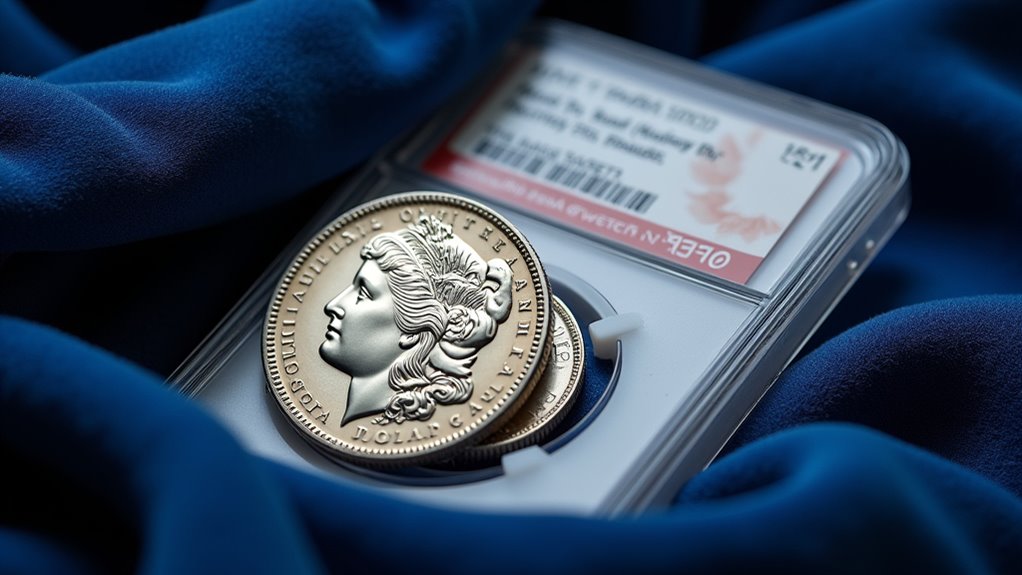
While many collectors plunge into numismatics with dreams of striking it rich, understanding US coin values requires serious knowledge of two critical factors – condition and rarity. These aren’t just fancy words tossed around by dealers – they’re the bedrock of what makes some coins worth pennies and others worth fortunes that’ll make your jaw drop faster than a gold brick.
Success in coin collecting isn’t about luck – it’s about mastering condition and rarity, the two pillars that separate pocket change from treasures.
Let’s get real about condition – it’s absolutely brutal how one tiny scratch can decimate a coin’s value. Professional grading services use the Sheldon Scale, running from 1 to 70, to determine just how pristine (or beat up) a coin really is. Mint State grades, like the coveted MS-60 and above, mean the coin hasn’t been touched by the grubby hands of commerce. Essential numismatic apps can help you track these grades and values. Understanding professional grading standards can also guide collectors in recognizing the true quality of their coins, while legitimate dealers can help ensure you’re not getting scammed.
But here’s the kicker – even the slightest hint that someone tried to clean their “treasure” can tank its value faster than you can say “numismatic nightmare.”

Speaking of nightmares, rarity is where things get properly insane. Take the 1927-D Saint-Gaudens Double Eagle – it’s not just rare, it’s unicorn-level scarce. The funny thing about rarity? Sometimes it happens naturally through attrition (think about all those wheat pennies that got melted down), and sometimes it’s manufactured faster than a celebrity apology video. Mint numbers matter enormously – the fewer coins produced, the more collectors foam at the mouth to get their hands on one.
But here’s where it gets really interesting – condition and rarity play off each other like a twisted game of monetary musical chairs. A super-rare coin in terrible condition might be worth less than a common coin in perfect condition. And don’t even get us started on near-mint varieties with unique features – those oddities can command prices that’ll make your investment advisor need a lie-down.
The market for numismatic coins isn’t just volatile – it’s downright schizophrenic. One day, everyone’s fighting over Buffalo nickels, the next they’re all about Morgan dollars. Professional grading has brought some sanity to the chaos, but let’s be honest – there’s still plenty of wild speculation driving prices through the roof (and occasionally through the floor).
For those brave souls venturing into numismatics, remember this: graded coins are your best friends. They’re like having a professional wingman who’s actually done their homework.

Sure, raw coins might look tempting, but unless you’ve got eyes like an eagle and the wisdom of Solomon, stick with the slabbed stuff. And whatever you do, don’t clean your coins – seriously, just don’t. That’s like trying to fix a Picasso with a magic marker – it never ends well. Furthermore, understanding gold numismatics can enrich your collecting experience by connecting you to history while also investing in tangible assets.
Frequently Asked Questions
How Do I Protect My Rare Coins From Environmental Damage?
Protecting rare coins demands obsessive attention to detail, folks!
Keep those precious pieces in a controlled environment with 30-50% humidity using silica gel packs or dehumidifiers (oops).
Store coins in PVC-free holders – seriously, PVC is the enemy here!
Handle edges only with cotton gloves, because those fingerprints are coin-killers.
And for heaven’s sake, keep ’em away from sunlight like they’re vampires.
Professional grading? Totally worth every penny!
Which Coin Grading Service Is Most Trusted by Collectors?
PCGS dominates the collector’s trust game, hands down.
While NGC nips at its heels (especially in world coins), PCGS’s rock-solid reputation since ’86 makes it the go-to grader that serious collectors can’t ignore.

CAC adds another layer of confidence by slapping their green bean on worthy specimens, but it’s PCGS that consistently tops collector surveys.
Their strict standards and market premiums speak volumes – when it matters most, PCGS is king.
Where Can I Find Reputable Coin Dealers in My Area?
The American Numismatic Association’s Dealer Directory is a goldmine for finding legit coin dealers nearby.
Smart collectors cross-reference BBB ratings and PNG membership – because nobody wants to get burned by sketchy operators!

Local coin clubs often maintain lists of trusted dealers too.
Pro tip: hit up regional coin shows where dealers gather in-person.
Just remember to verify credentials and check those customer reviews before pulling the trigger on any deals.
What Makes Some Mint Errors More Valuable Than Others?
Mint errors gain their value through a perfect storm of factors.
Rarity reigns supreme – the scarcer the mistake, the higher the price tag. Dramatic errors like wrong planchets or doubled dies command way more attention than tiny die cracks.

Pristine condition is essential too – a mint-state error coin can fetch 10x more than its worn counterpart.
And when multiple errors collide on one coin? Collectors go absolutely bonkers, driving prices through the roof.
How Often Should I Have My Valuable Coins Professionally Re-Evaluated?
Bullion coins demand quarterly check-ups due to wild market swings, while those fancy numismatic rarities can cruise 1-5 years between evaluations.
But here’s the kicker – environmental exposure or clumsy handling can force an emergency appraisal faster than you can say “mint error!”
Collections worth serious dough should get professional eyes on’em more frequently.
Pro tip: if insurance matters (and it should), keep those appraisals fresh. Market’s always doing its crazy dance, ya know?