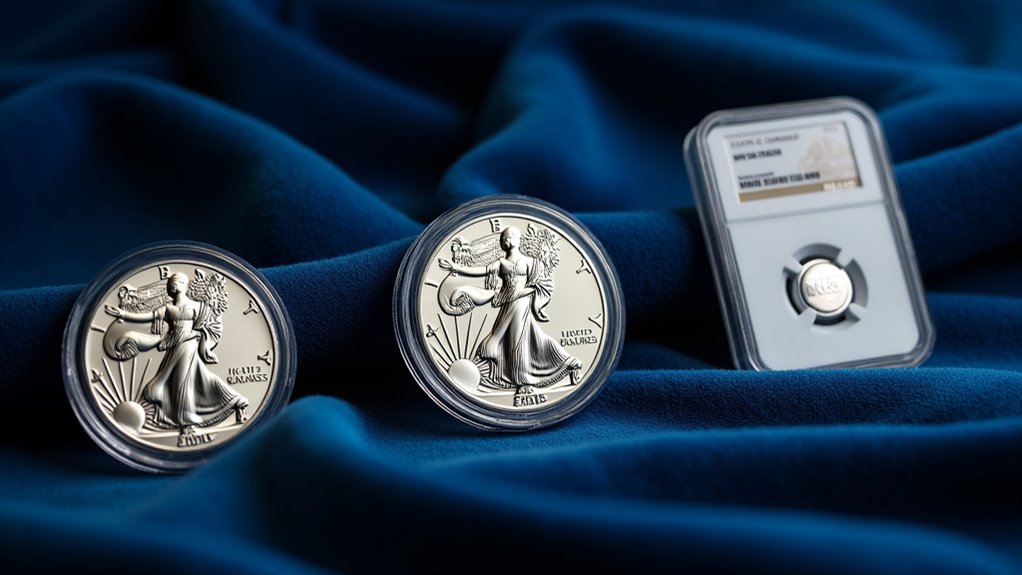
Authenticating rare coins requires a multi-pronged assault on counterfeits. Smart collectors start with meticulous visual inspection – scrutinizing wear patterns, mint marks, and those telltale rim details that fakers love to botch. But don’t stop there! Weight and measurements need precision tools, while metal composition testing acts like a coin’s DNA fingerprint. Professional grading services (PCGS and NGC) offer the ultimate verdict. There’s a whole world of numismatic detective work waiting to be explored.
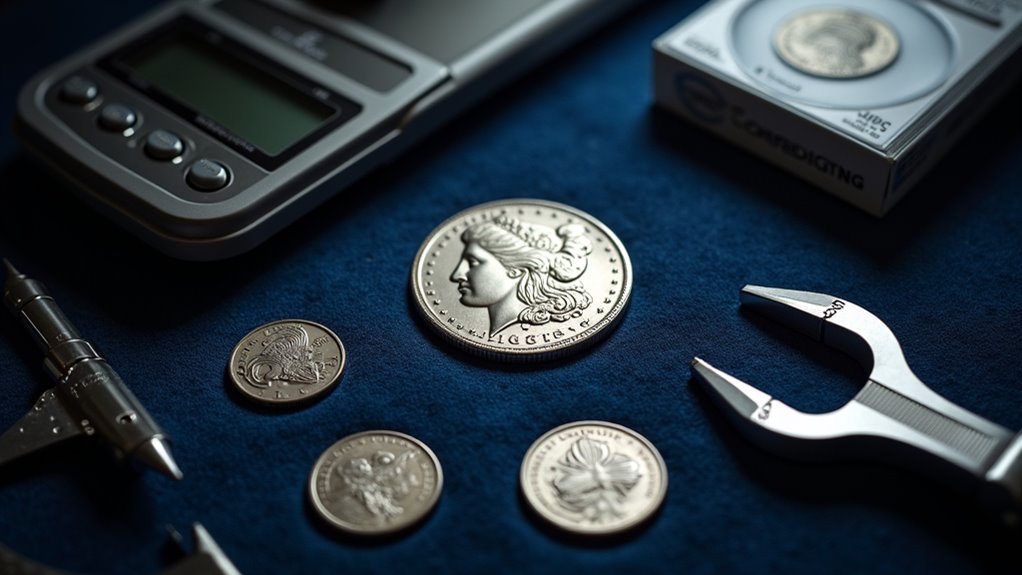
When thousands of dollars hang in the balance, authenticating rare coins isn’t just smart – it’s absolutely essential for collectors and investors who don’t want to get burned by clever fakes. The authentication process demands meticulous attention to detail and a multi-faceted approach that leaves no stone unturned. Gone are the days when a simple visual inspection would suffice – today’s counterfeiters are getting scarier good at their craft.
The first line of defense starts with your eyes and hands. A thorough visual and physical inspection reveals wear patterns, mint marks, and those subtle design quirks that separate genuine articles from imposters. Authentic coins develop natural patinas over time – none of that artificial aging nonsense that fraudsters try to pull off. The devil’s in the details, especially around those edges and rims where counterfeiters often slip up. Additionally, it’s important to be aware of common types of fakes that collectors often encounter. Understanding professional grading services can also help you identify genuine coins, as they utilize advanced techniques for authentication. Using numismatic apps can further streamline your research and tracking process.
Trust your senses first – authentic coins tell their stories through natural wear patterns, genuine patinas, and those devil-in-the-details edges.
Getting scientific about it, weight and measurements don’t lie (usually). A precision scale and digital calipers are your best friends here – because when a coin’s dimensions are off by even a fraction of a millimeter, something’s definitely fishy. Smart collectors cross-reference everything against official mint specs, treating discrepancies like red flags at a bull fight. Additionally, understanding coin grading scales can help you appreciate how even minor flaws can affect a coin’s value.

Here’s where it gets really nerdy (in the best way possible) – metal composition testing. X-Ray Fluorescence sounds fancy, but it’s basically your coin’s DNA test. Genuine precious metals have specific conductivity signatures and magnetic properties that are harder to fake than your cousin’s ID at college. And speaking of properties, that classic “ping test” isn’t just numismatic folklore – authentic coins sing a specific tune that counterfeits just can’t match.
Under magnification, the truth comes out like teenagers’ secrets at prom. A good loupe or microscope reveals micro-engraved details that separate the real deals from the wannabes. Those tiny imperfections and die cracks? They’re actually your allies in authentication, telling stories that counterfeiters can’t quite replicate.
The pros know – when in doubt, call in the big guns. Professional grading services like PCGS and NGC are basically the Supreme Court of coin authentication. Their encapsulated certifications aren’t just fancy plastic cases; they’re the difference between “probably legit” and “definitely authentic.” Plus, they grade coins on the Sheldon Scale, which is like a report card for your precious metal babies.
The authentication game is constantly evolving, with counterfeiters getting more sophisticated by the minute. But armed with the right tools, knowledge, and a healthy dose of skepticism, collectors can stay ahead of the curve. Just remember – if a deal seems too good to be true, it probably is, and there’s no shame in walking away from a sketchy situation. After all, in the rare coin world, paranoia isn’t just healthy – it’s profitable.
Frequently Asked Questions
How Often Should I Have My Rare Coins Professionally Appraised?
Rare coins demand professional appraisals every 2-3 years – that’s just the cold, hard truth of the numismatic world.
But hey, some situations scream for more frequent check-ups! High-value pieces, market volatility, or coins destined for sale? Get those babies appraised stat.

Estate planning or insurance requirements might force your hand too.
Pro tip: coins stored in less-than-ideal conditions need extra attention – moisture’s a killer, folks!
What Insurance Options Are Available for Valuable Coin Collections?
Coin collectors have several solid insurance options to protect their precious pieces. Homeowner’s policies offer basic coverage but often fall short for serious collections.
Specialized collectibles insurance is where it’s at – delivering agreed-value protection, zero deductibles, and coverage during transit. The real MVP? Standalone policies that won’t mess with homeowner’s premiums.
For collections over $50k, expert providers deliver tailored coverage with sweet perks like accessory protection and market-value compensation.
Where Are the Safest Places to Store Rare Coins?
The safest havens for rare coins? Private vaults take the crown, offering next-level security with climate controls that’d make a penguin jealous.
Bank safe deposit boxes come in second – solid protection, though those pesky banking hours can be a drag.
For home storage (if you’re brave enough), climate-controlled spaces with proper holders are essential.

Just keep those beauties far from basements and attics – they’re basically coin torture chambers!
Think airtight, think dry, think secure.
Can Cleaning Rare Coins Increase or Decrease Their Value?
Cleaning rare coins is a recipe for disaster – period.
The market absolutely despises cleaned specimens, slashing their value by 20-80% faster than you can say “numismatic nightmare.”

Even gentle cleaning leaves microscopic scratches that make serious collectors run for the hills.
Third-party graders? They’ll slap that dreaded “Details” grade on cleaned coins faster than a falling bitcoin.
Natural patina is money in the bank; cleaning is basically setting that money on fire.
Which Rare Coins Have Shown the Best Investment Returns Historically?
The 1933 Saint-Gaudens Double Eagle stands as the king of rare coin investments, smashing records with an $18.9M sale in 2021.
Following close behind, the 1804 Draped Bust Dollar‘s been a consistant rock star performer.

The 1913 Liberty Head Nickel? Pure investment gold!
Early American colonials like Massachusetts Silver pieces keep crushing it too.
But here’s the kicker – those 1907 Ultra High Relief Saint-Gaudens just won’t quit, regularily fetching 7-figure prices.