Modern prospecting gear packs serious punch in tiny packages. Today’s portable gold mining equipment combines lightweight mobility with professional-grade extraction power – from basic panning kits to high-tech metal detectors and compact sluices. Backpack dredges and suction units let prospectors tackle underwater deposits, while portable crushers handle tough material right in the field. Safety gear and GPS devices round out the essential kit. There’s a whole world of golden possibilities waiting to be unearthed.

The glitter of gold beckons, but modern prospectors aren’t lugging around their grandfather’s heavy mining gear anymore. Today’s gold hunters pack lightweight, portable equipment that transforms any promising location into a potential mining operation. From basic panning kits to sophisticated electronic detection systems, the evolution of prospecting gear has made the pursuit of precious metals more accessible than ever. Essential tools can significantly enhance a prospector’s chances of success.
The foundation of any prospector’s arsenal starts with the humble gold pan, now engineered with slanted bottoms for ideal particle separation, accompanied by essential tools like suction bottles and tweezers for handling those elusive golden flakes. But let’s be real – nobody’s getting rich with just a pan these days. Proper mineral separators and crushers are essential for efficient ore processing and extraction in the field. Experienced prospectors know that using safety goggles is crucial when operating any crushing equipment. Additionally, prospecting equipment now includes a variety of tools that cater to both beginners and seasoned miners, including dry gold panning equipment designed specifically for arid conditions. The introduction of small-scale mining operations has also encouraged more individuals to try their hand at gold prospecting.
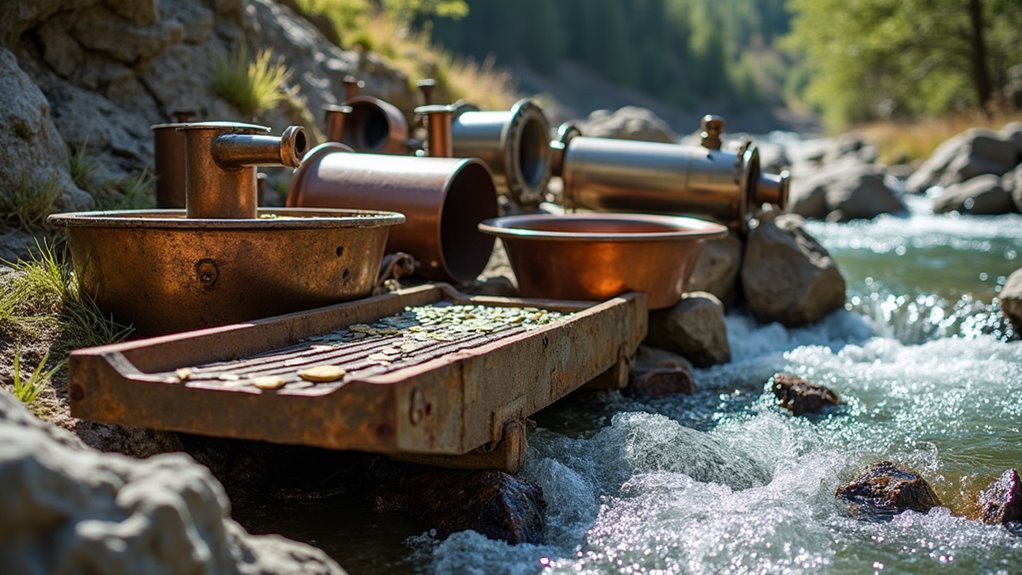
Modern sluice boxes have revolutionized the game, featuring removable riffles and miners moss that trap gold while letting worthless materials wash away. The introduction of portable power sluices like the Gold Cube has been a game-changer for serious prospectors who don’t want to break their backs. Recent advancements in gold panning gear have also improved efficiency and effectiveness for weekend miners.

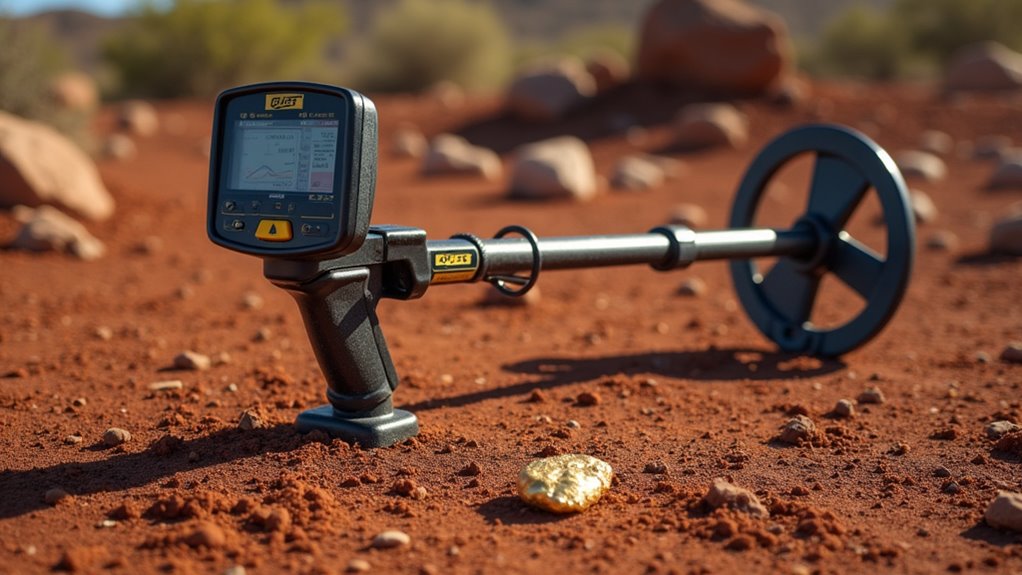
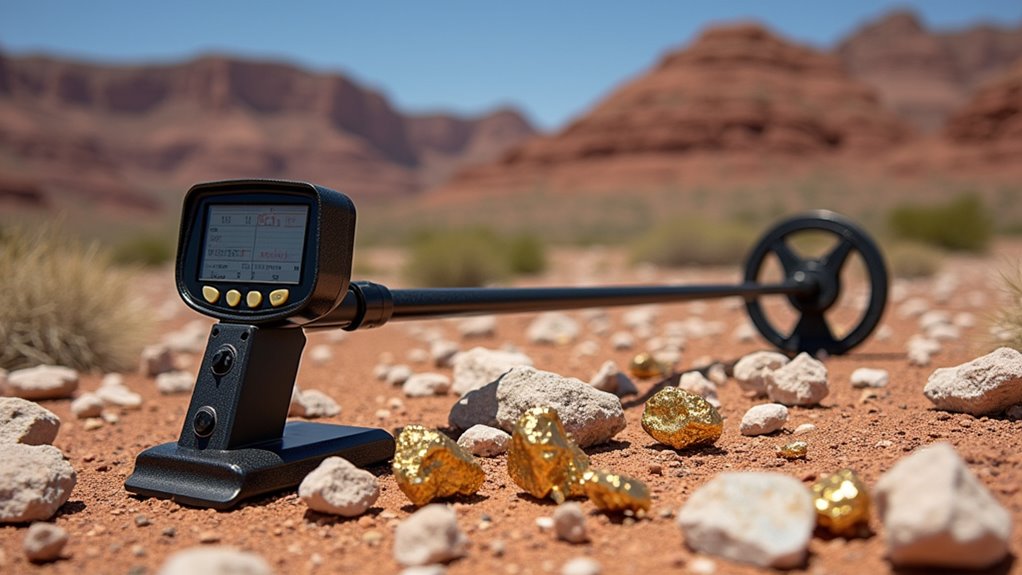
Metal detectors have evolved beyond simple treasure-hunting toys. VLF and PI detectors now cut through mineralized soil like a hot knife through butter, while specialized gold nugget detectors can sniff out those sweet yellow chunks that make every prospector’s heart skip a beat. Some of these bad boys even work underwater – because who said gold hunting had to stay dry?
When it comes to processing harder materials, portable crushers have become increasingly sophisticated. Hand-operated rock crushers and compact jaw crushers allow prospectors to tackle tough ore right in the field, while mortar and pestle sets remain reliable for quick sample testing.
The real magic happens with concentrators though – from centrifugal units that spin out fine gold to spiral wheels that keep the processing going non-stop, these devices have turned efficient recovery from a dream into reality.
Dredging operations have also gone portable, with backpack dredges and small suction units making underwater prospecting accessible to solo operators. Highbanker/dredge combos offer versatility that would’ve made old-timers weep with envy, while floating dredges let prospectors tackle deeper waters without needing a full-scale operation.

Safety equipment hasn’t been left behind in this evolution. Modern prospectors pack lightweight generators, portable water pumps, and GPS devices alongside their traditional protective gear. First aid kits are essential because, let’s face it, gold fever doesn’t make you invincible.
The combination of these tools has created a new breed of prospector – mobile, efficient, and ready to chase color wherever it might be hiding. Whether working a remote creek or exploring abandoned claims, today’s portable mining equipment allows prospectors to move fast and hit hard when opportunity strikes.
Frequently Asked Questions
What Permits or Licenses Do I Need for Portable Gold Mining Operations?
The permit maze for gold mining? It’s not as scary as it looks!
Recreational panners often slide by permit-free, but portable operations need some paperwork muscle.

Small-scale permits kick in under 10 acres (think 25k tons/year max), while the big boys need heavy-duty permits for larger spreads.
Here’s the kicker – chemical leaching? That’s automatic large-scale territory.
Don’t forget MSHA safety regs and local zoning laws lurking in the shadows!
How Much Gold Can I Typically Expect to Find per Day?
Daily gold finds vary wildly – there’s no sugar-coating it!
Recreational panners might snag 0.1-1 gram (if they’re lucky), while sluice box warriors can pull 1-5 grams.
The real players with high-bankers? They’re hitting 5-15 grams daily.
Getting fancy with small dredges could net 10-50 grams, but don’t count your nuggets before they’re weighed!
Commercial setups w/ proper equipment push those numbers way up – we’re talking 100+ grams daily.

Nothing’s guaranteed tho!
What Weather Conditions Are Unsuitable for Using Portable Gold Mining Equipment?
Severe weather’s a real party-pooper for gold prospecting!
Heavy rainfall creates dangerous flooding and unstable ground conditions – total no-go.
Lightning storms? Yeah, that’s a hard pass with all that metal equipment.

Extreme temps (both scorching and freezing) mess with machinery and make life miserable.
High winds? They’ll send your setup flying and create visibility nightmares.
Bottom line: if Mother Nature‘s throwing a tantrum, pack it up n’ head home.
How Do I Properly Maintain and Clean Gold Mining Equipment?
Regular cleaning’s absolutely essential – miners gotta blast off that dirt and debris after each use.
Smart operators follow a strict maintenance schedule, hitting those moving parts with proper lubrication (no cheapo stuff!).
Equipment needs thorough inspections b4 and after use, checking for wear and tear.
Store everything in dry spaces, away from moisture that’ll eat away at metal components.
And hey, keep detailed maintenance records – they’re worth their weight in… well, gold!
What Safety Precautions Should Be Taken When Mining Alone in Remote Areas?
Solo mining in remote areas demands hardcore safety protocols.
Smart prospectors never head out without satellite phones and personal locator beacons – dead zones don’t play nice! They’ll tell someone trustworthy their exact location and check-in schedule (or else!).
First aid kit’s gotta be legit, and that emergency food stash better be more than just candy bars.
Weather tracking? Essential.
And here’s the kicker – some areas straight-up ban solo mining. Check local regs first!