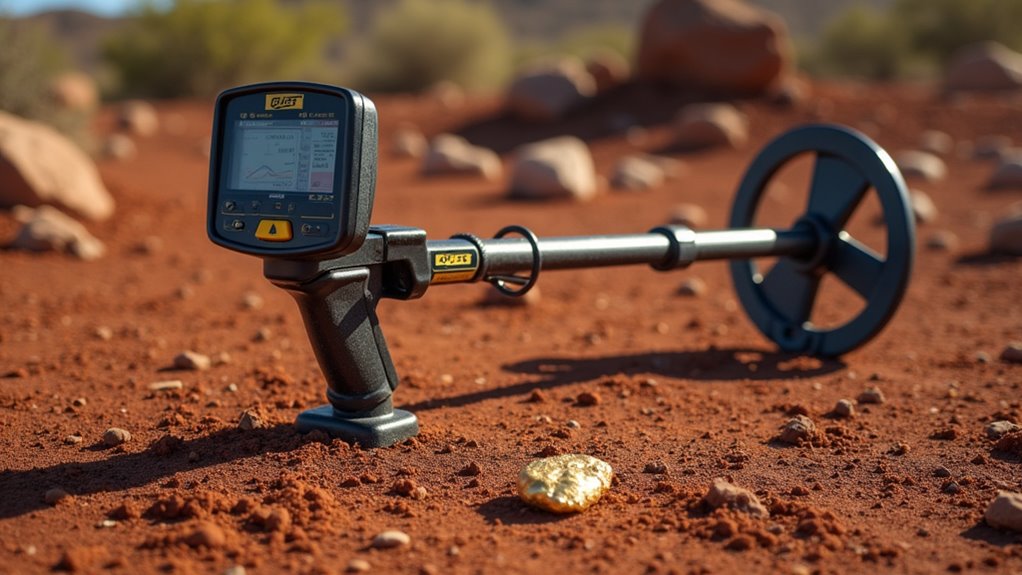
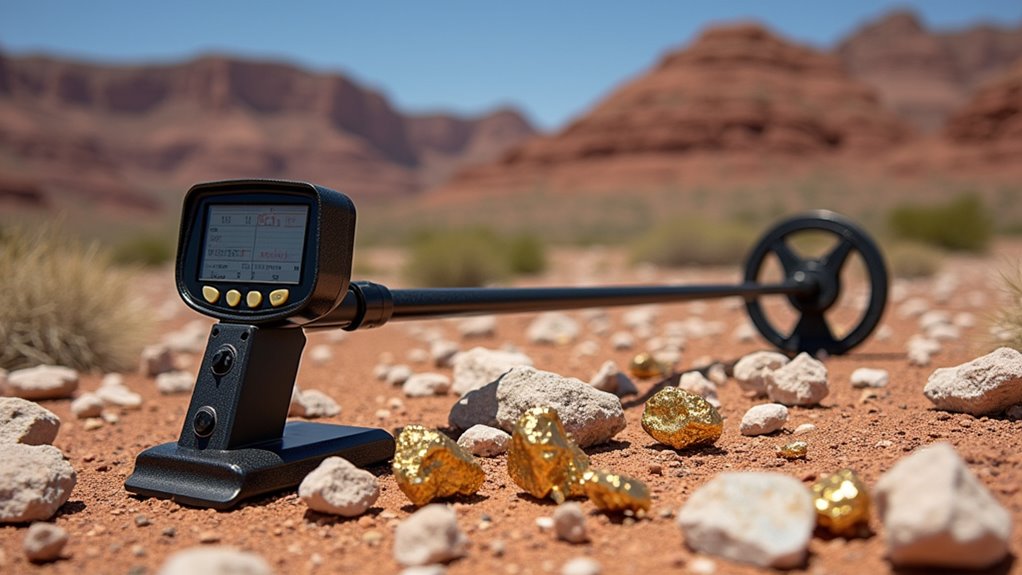
Gold dredging packs serious underwater punch, combining raw suction power with precision mining tech. Modern dredges range from backpack-sized units to massive machines, all designed to vacuum precious metals from riverbeds and process them through specialized sluice systems. Operators need permits and safety gear, plus maintenance know-how to keep their equipment running smooth. Environmental awareness is essential – nobody likes a messy miner. There’s way more beneath the surface of this fascinating extraction method.

Most gold dredging operations today rely on suction power to vacuum precious metal deposits from underwater environments – a far cry from the pan-and-shovel days of ’49ers.
Modern gold mining harnesses vacuum technology to extract underwater riches, leaving primitive pan-and-shovel methods in history’s dust.
Modern dredging equipment runs the gamut from portable backpack units to massive cutter-suction behemoths, with suction dredges claiming the top spot for small-scale mining enthusiasts who’re chasing that yellow metal. Plain-suction dredges are particularly effective for loose sediment removal in gold-rich areas. The use of sluice boxes can greatly enhance recovery rates in these operations, especially when optimized for flow rate to ensure maximum gold capture. In addition, understanding the environmental impact of dredging is crucial for sustainable practices.
The anatomy of a gold dredge reads like a prospector’s wish list – suction nozzle, pump, sluice box with riffles, and a classification system that separates the worthless rocks from potential paydirt. Early models were several stories high and required extensive crew operations to function properly.

These components work in harmony, powered by gas engines that keep the operation humming along while miners work the riverbed with methodical precision.
Speaking of riverbeds – location is everything in this game. Smart operators target river bends where Mother Nature’s done half the work, depositing gold in predictable patterns thanks to slower water flow.
Waterfall bases and debris-cluttered areas are prime hunting grounds, particularly in gold-rich jurisdictions like Colorado, Alaska, and California’s legendary streams.
Success in dredging demands more finesse than brute force. Seasoned operators work in systematic horizontal layers, avoiding the rookie mistake of “nitpicking” scattered spots.

They’ll clear oversized rocks methodically, using pry bars and underwater hammers to access those tempting bedrock crevices where the good stuff often hides.
But before anyone fires up that dredge, there’s the small matter of environmental compliance. Permits aren’t optional, and regulations governing material disposal can’t be ignored.
While dredging can actually benefit waterways by removing excess sediment, operators must balance their gold fever with ecosystem preservation – it’s just part of the modern prospecting game.
Equipment maintenance separates the pros from the wannabes. Smart operators inspect their gear religiously, keeping fuel levels ideal and safety equipment ready.

Whether you’re working in chest-deep water or merely skimming the shallows, proper wetsuits and awareness of water conditions can mean the difference between a productive day and a dangerous situation.
The real magic happens during processing, where operators transform their hard-won concentrates into something worth bragging about.
Sluice boxes and high-bankers separate the wheat from the chaff, while careful panning reveals those heart-stopping yellow flakes.
Smart miners never discard their black sand – that stuff often holds microscopic gold that adds up faster than you’d think.
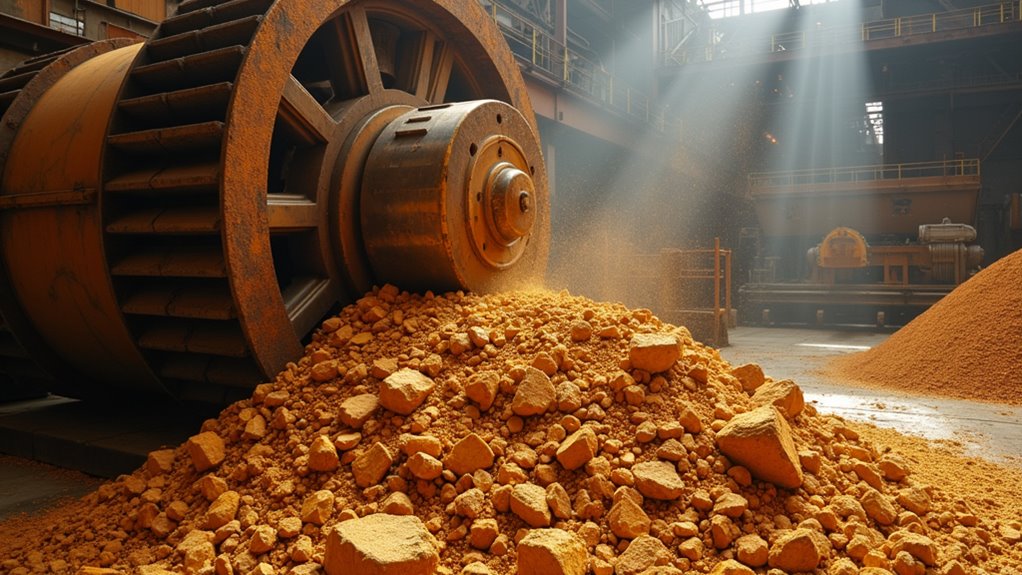
Even metal detectors get in on the action, helping locate larger nuggets that might’ve slipped through the classification system.
The modern gold dredger walks a fine line between environmental steward and treasure hunter, armed with technology that would make those old-timers’ heads spin.
It’s a far cry from simple panning, but the thrill of discovery remains just as intoxicating as it was during the first gold rush.
Frequently Asked Questions
What Permits or Licenses Do I Need Before Starting Gold Dredging?
Dredgers better buckle up – the permit parade is no joke!
Federal permits through the Army Corps are mandatory for most U.S. waters, while state permits add another layer of bureaucratic fun. Local jurisdictions might demand their own paperwork too, especially for land disturbance.

Each application needs detailed project specs, equipment descriptions, and site plans.
Pro tip: some states flat-out ban certain dredge types, so check local regs before dropping cash on gear.
How Deep Underwater Can a Typical Gold Dredge Effectively Operate?
Typical gold dredges pack serious depth potential – most suction dredges comfortably operate at 125 feet, while some beasts can plunge to 200 feet!
But here’s the kicker: smaller backpack dredges stick to shallower waters, while mid-range units sweet-spot it between 40-60 feet.

The real limiting factors? Pump power, umbilical length (maxes around 400 feet), and those pesky diver safety concerns.
Deeper ops need specialized gear and serious know-how!
What Time of Year Is Best for Gold Dredging?
Summer takes the gold medal for dredging season! Low water levels mean easier riverbed access, while late spring’s snowmelt delivers fresh paydirt downstream.
Smart prospectors also hit it hard in early fall before the rains kick in – fewer folks out there competing for claims.
Even winter can pay off, especially on ocean beaches where extreme low tides expose virgin ground.
Just remember to dodge those fish spawning seasons – nobody wants to mess with Mother Nature’s swimmers.
How Much Does a Complete Gold Dredging Setup Typically Cost?
A complete gold dredging setup can range from dirt-cheap to eye-wateringly expensive!
Small portable rigs start around $2,000, while serious mid-size operations (10-12 inch dredges) run $225,000-$525,000.
Don’t forget the extras – pipes, pumps, and support equipment add roughly $13 per foot.
Factor in permits, environmental studies, and maintenance costs, and you’re looking at $1-5 million for a full commercial operation.
Yikes – better find some serious gold!
Can I Legally Sell the Gold I Find While Dredging?
Yes, dredged gold can be legally sold, but there’s a maze of requirements to navigate.
Prospectors must report findings on tax returns and allow 28 days for original owners to claim discovered property.
The real kicker? Those shiny nuggets can be sold through various channels – refiners, jewelers, or even eBay – but each has its own quirks and requirements.
Smart sellers research buyers’ policies and pricing to maximize their return‘s.