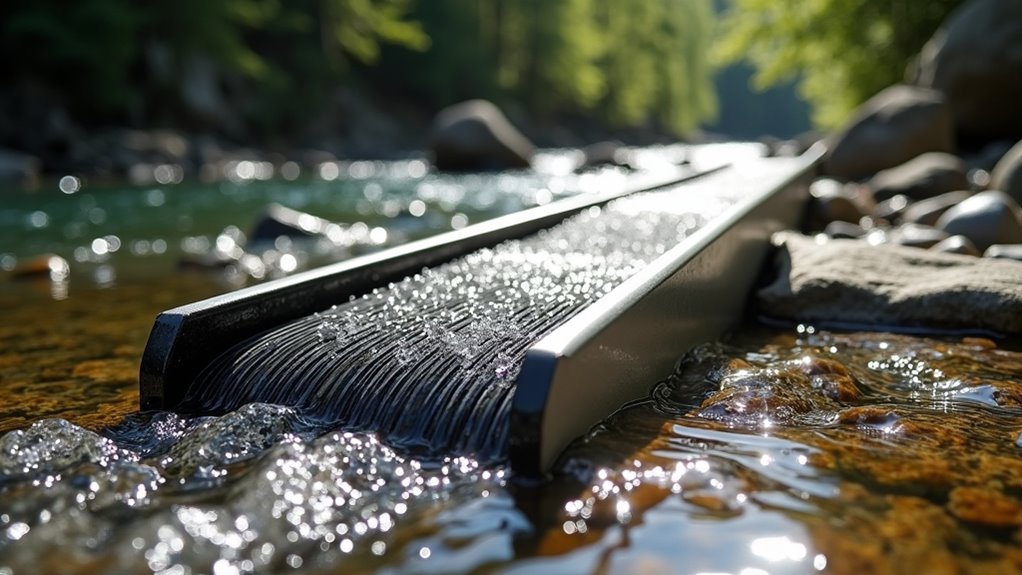
Setting up a gold sluice demands precise attention to detail. The ideal configuration requires a 1-inch drop per foot and level side-to-side positioning, secured with rocks to prevent movement. Essential components include miner’s moss, black matting, and expanded metal for maximum gold capture. Water flow should create a smooth V-pattern, hitting the second knuckle in riffle areas. A 1/4-inch classifier helps sort material effectively. There’s more gold-grabbing secrets beneath the surface.

Prospectors drooling over pristine gold flakes know the secret lies in a properly configured sluice box setup. The difference between a mediocre haul and hitting paydirt often comes down to the nitty-gritty details of sluice placement and water management. Savvy miners recognize that proper setup isn’t just about dropping a box in moving water – it’s an art form that demands precision and a keen eye for detail. Pan testing your material before sluicing helps determine the optimal setup configuration. Additionally, having the right gold hunting supplies can enhance your overall efficiency in the field. It’s crucial to choose gold pan products that complement your sluice setup to maximize your chances of success. A well-constructed sluice box can significantly improve recovery rates in your alluvial mining efforts, and understanding prospecting equipment can further enhance your gold-mining experience.
Getting the angle right is absolutely essential (and we mean essential). A 1-inch drop per foot of sluice length is the sweet spot that’ll make seasoned prospectors nod in approval. The box needs to be level side-to-side, though, or you’ll end up with more fool’s gold than the real deal. And for heaven’s sake, secure that box with rocks – nothing worse than watching your investment float downstream like a wayward canoe. The tailings pile should sit at a distance that allows proper drainage and efficient processing. Using sluice boxes made from durable materials can also prolong your investment.
Set your sluice at a 1-inch drop per foot and level it side-to-side, or kiss your gold dreams goodbye.
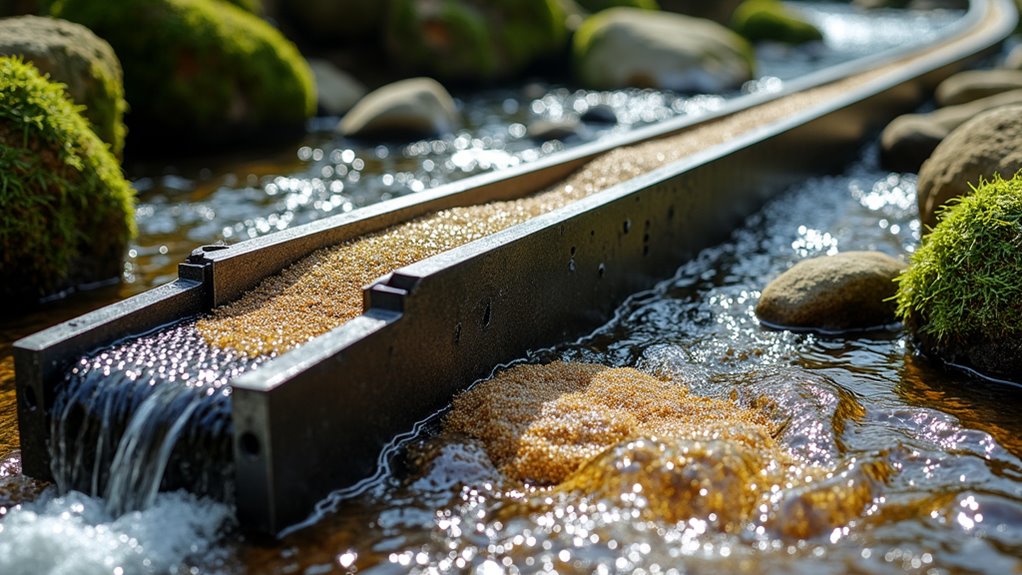
Water flow management separates the amateurs from the pros. You want that water hitting your second knuckle in the riffle area, creating a hypnotic “V” formation above the top riffles. If your water’s jumping around like a caffeinated jackrabbit, you’re doing it wrong. The flow should create a smooth sine wave over those riffles – pure poetry in motion.

Material classification isn’t just busywork for the obsessive-compulsive among us. Start with a 1/4 inch classifier and adjust based on your gold size. Pro tip: wet that material before it hits the sluice, unless you enjoy watching potential profits wash away.
And speaking of feeding – slow and steady wins this race. The “hit, stick, and flow” method might sound like a dance move, but it’s your ticket to maximum recovery.
Your sluice components better be up to snuff. Miner’s moss or similar matting is non-negotiable, and that black matting up front isn’t just for show – it’s your gold-spotting secret weapon. Expanded metal adds another layer of capture capability, cause let’s face it, nobody wants to see their gold partying in the tailings pile.
Location choice can make or break your operation. Look for that sweet spot where fast and slow water meet, like nature’s own gold trap. Wing dams aren’t just fancy engineering – they’re your best friend for directing water flow.

And don’t forget to dig that tailings hole, unless you enjoy creating impromptu beaches downstream.
Maintenance might not be sexy, but it’s what separates the successful miners from the dreamers. Clean that sluice regularly, and when you lift it out, keep it level – unless you enjoy watching your hard-earned gold taking a final swim.
And for Pete’s sake, don’t forget to check that cleanup bucket thoroughly. There’s nothing worse than finding out later that your best nuggets were hiding in plain sight.
Frequently Asked Questions
How Long Does a Sluice Box Typically Last Before Needing Replacement?
A well-made sluice box typically lasts 5-10 years with proper care, but lifespan varies dramatically based on usage and conditions.
Commercial operators often replace’em annually, while weekend warriors might squeeze 3-5 seasons outta one box.

Harsh environments can slash longevity to 1-3 years.
Pro tip: components like mats and riffles need more frequent swaps than the main structure.
Regular maintenance is key to maxing out that sweet, sweet box life!
Can I Use a Sluice Box in Saltwater Conditions?
Sluice boxes can technically be used in saltwater, but it’s not a walk in the park!
The corrosive nature of saltwater wreaks absolute havoc on standard equipment – we’re talking serious damage here.
Smart miners opt for marine-grade materials like 316 stainless steel or specialized coatings.
Plus, there’s the whole mess with permits and environmental regs to deal with.
Bottom line: possible but problematic. Better stick to freshwater unless you’ve got specialized gear!
What’s the Minimum Water Depth Needed to Operate a Sluice Effectively?
The sweet spot for sluice operation is typically 2 inches of water depth – that’s the magic number where things start humming!
Course, it ain’t set in stone. Your setup might need tweaking based on riffle height and box width. The key’s making sure water nearly kisses the top edge without spillin’ over.

Some folks run deeper for chunky material, while fine gold recovery can work with less. Just keep it turbulent but not crazy frothing!
Are Permits Required for Recreational Sluicing in Public Waterways?
Yes, permits are typically required for recreational sluicing in public waterways.
Requirements vary dramatically by state and locality – California’s got a total suction dredge ban, while Michigan lets you pan without paperwork.
Most areas need some combo of state/federal permits, especially when using mechanized equipmet.

The real kicker? Multiple permits might be needed, and some waterways are completely off-limits.
Smart miners check local regs before setting up their sluice boxes.
How Often Should I Clean and Maintain My Sluice Box Matting?
Sluice matting needs cleaning every 1-2 hrs of operation for peak gold recovery – that’s just facts, folks!
But here’s the juicy part: rich ground can stretch that to 40-60 dive hours if you’re feeling lucky.
Daily cleanups? Heck yes, if you’re serious about maximum yield.
Pro tip: when gold starts showing up 2/3 down the sluice, its screaming for attention!
Watch for worn spots and replace matting before it betrays you’re precious paydirt.