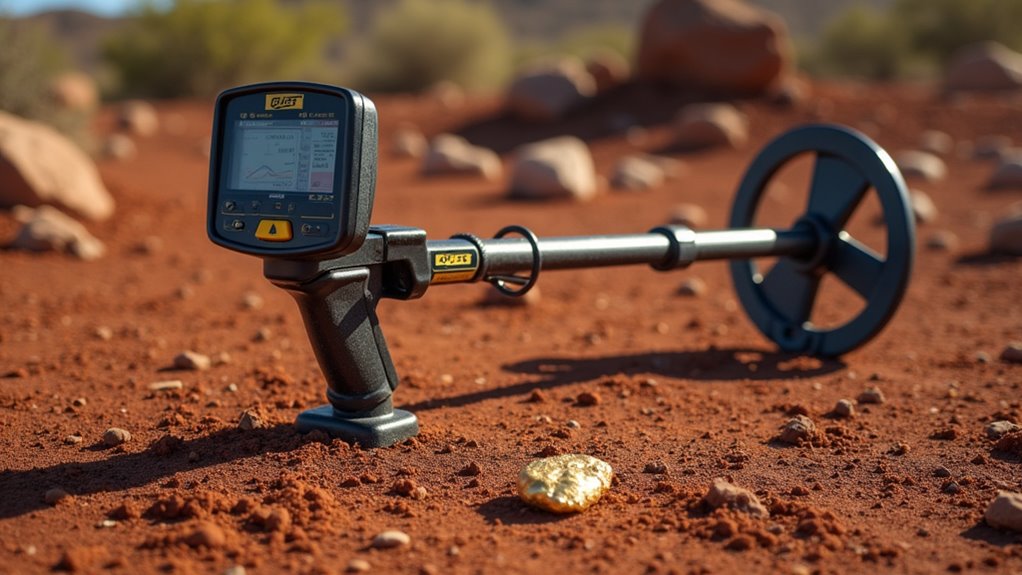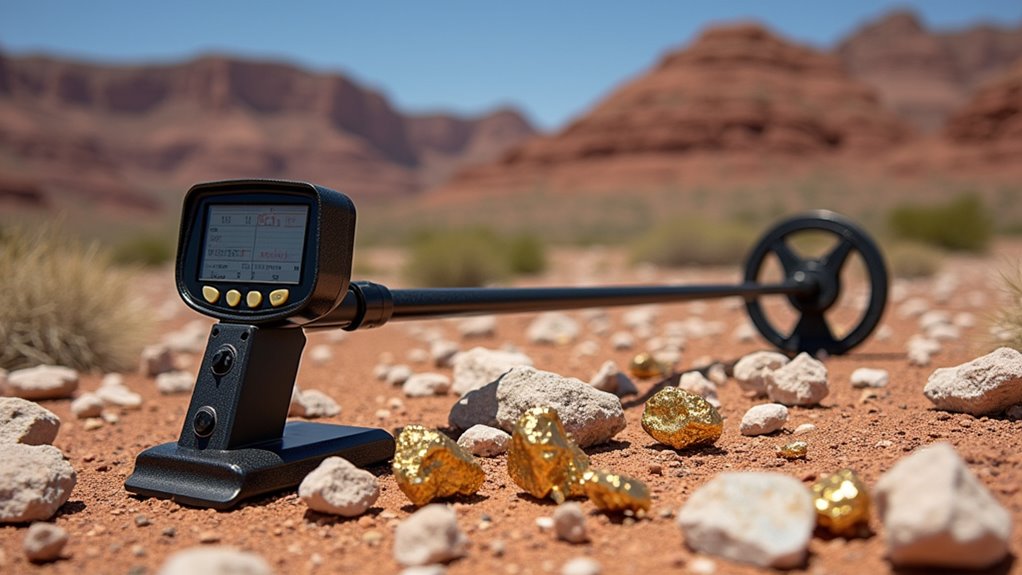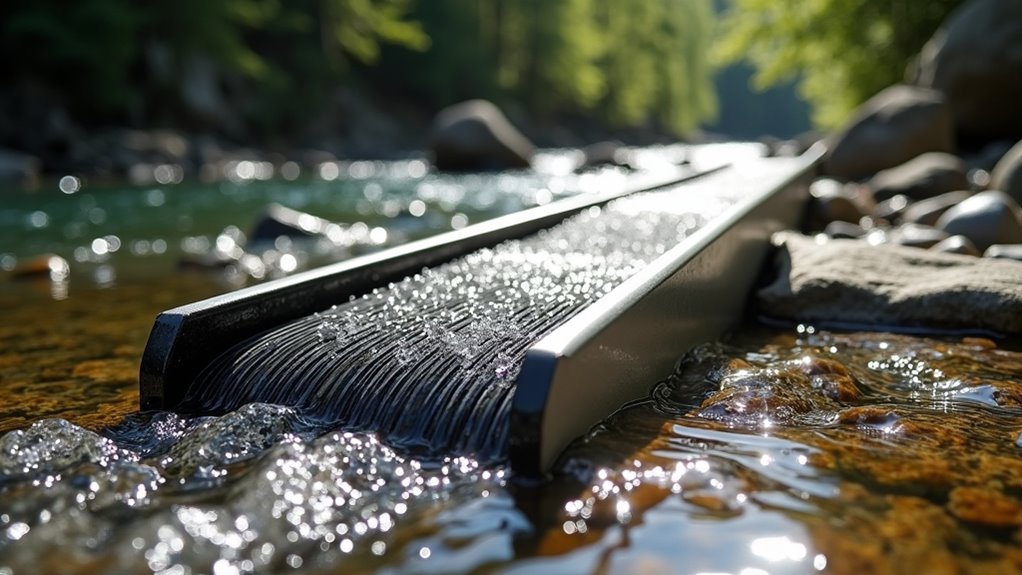

Choosing a quality prospecting sluice means prioritizing durability and gold-catching efficiency above all else. American-made components with specialized matting and precisely engineered riffles help snag those elusive particles down to 100 mesh. Smart prospectors look for lightweight yet tank-tough construction, quick setup features, and proper angle adjustability of one inch per foot. While premium sluices aren’t cheap, skimping on equipment is a rookie mistake that’ll cost ya plenty in missed gold. There’s way more to reflect upon when picking your perfect sluice.

When it comes to snagging those elusive golden flakes from streams and creeks, choosing the right prospecting sluice can make the difference between a backpack full of black sand and a vial of the good stuff. The market’s flooded with options, but not all sluices are created equal – some are pure gold, others are just fool’s gold in disguise.
Premium quality materials are non-negotiable for serious prospectors. American-made components with corrosion-resistant properties guarantee your investment doesn’t dissolve faster than your dreams of striking it rich. The best sluices combine lightweight portability with tank-like durability, cause nobody wants their equipment failing mid-stream when the gold’s running hot. Setting the proper one inch per foot angle is crucial for optimal performance, as this ensures maximum water flow and gold capture efficiency. Additionally, proper positioning is vital to enhance the sluice’s effectiveness in capturing gold.
Recovery efficiency is where the rubber meets the road – or should we say where the gold meets the mat? Top-tier sluices feature specialized matting and precisely engineered riffles that create those sweet, sweet vortexes that trap fine gold particles. We’re talking capture rates down to 100 mesh, which means even those microscopic paydirt particles won’t slip through your fingers. The Yukon Mat’s tight-knit design ensures you won’t miss even the tiniest specks of gold. Many models also incorporate gold recovery technology that enhances efficiency even further. The best sluices also utilize advanced features such as adjustable riffles to further optimize gold recovery.

Setup shouldn’t require an engineering degree or three cups of coffee. The finest sluices pop together faster than you can say “There’s gold in them hills!” with adjustable angles that’ll handle whatever mother nature throws at you. And maintenance? Should be minimal – you’re here to prospect, not become a part-time mechanic.
Portability is vital unless you’re planning to homestead at your claim (and let’s be real, most of us have day jobs). The best sluices fold down smaller than your ego after a day of finding nothing but iron pyrite. They should be light enough to backpack into remote locations but sturdy enough to handle the abuse of real prospecting, making high-volume models a great option for those seeking efficiency.
Here’s where it gets interesting – versatility is your friend in the field. Your sluice should handle everything from fine gold to chunky nuggets (hey, we can dream) and adapt to different water conditions faster than a politician changes positions. The top performers work in everything from trickles to torrents.
When it comes to price, don’t be penny-wise and gold-foolish. Quality sluices ain’t cheap, but they’re an investment that’ll pay dividends in recovery rates and durability. Look for bundles that include classifiers and cleanup systems – it’s like getting extra fries with your burger, except these extras actually help you find gold.

The best sluices also offer room to grow, with interchangeable mats and compatibility with power sources when you’re ready to graduate from hand-feeding to mechanized operations. Because let’s face it – once gold fever hits, there’s no turning back.
Just remember: the perfect sluice is the one that matches your prospecting style, location, and budget – everything else is just marketing glitter.
Frequently Asked Questions
How Often Should I Clean My Sluice Box?
Sluice cleanup timing isn’t one-size-fits-all – it’s like reading your favorite metal’s mood swings!
Most prospectors clean after 40-60 hours of operation on rich ground, but some die-hards push it to 80-100 hours (living dangerously, eh?).

Watch for gold getting trapped further down the box – thats your signal. Weather, riffle type, and particle size all play their roles.
Some clean daily, others monthly – but nobody wants their precious finds making a break for it!
Can I Use a Sluice Box in Cold Weather Conditions?
Yes, sluicing in cold weather is totally doable – with some serious prep work!
Smart prospectors modify their equipment with insulation, heating elements, and cold-resistant materials. You’ll need to crank up water flow to prevent freezing and clean more frequently (ice buildup’s a pain).
The cold affects gold recovery efficiency, but hey, that’s what antifreeze solutions and thermal upgrades are for. Just don’t forget proper winter gear – hypothermia ain’t no joke!
The key’s in the details: adjust those riffles, monitor temps, and stay safe out there.
What Safety Precautions Should I Take When Using a Sluice Box?
Safety first, goldbugs! Non-slip boots are absolutely essential when working those slippery stream beds – nobody wants a face full of cold water!
Eye protection’s a must (flying rocks ain’t no joke), and those heavy-duty gloves’ll save your hands from nasty cuts.

Position that sluice on stable ground, away from deep holes or sketchy banks.
And hey – don’t forget permits! Environmental regs matter, and nobody wants the ranger crashing their gold party.
Are Permits Required for Using a Sluice Box in Public Waters?
Most public waters require permits for sluicing – there’s no getting around the red tape!
Federal regs demand Clean Water Act permits, while states pile on their own requirements.

Idaho’s hardcore about IPDES permits, California’s got strict seasons, and Alaska keeps recreational prospectors on a tight leash.
Here’s the golden nugget though – basic hand tools like gold pans often dodge permit requirements.
Better check local rules before draggin’ that sluice out!
How Do I Properly Store My Sluice Box Between Prospecting Trips?
Proper sluice box storage starts with a thorough cleaning – no excuses!
Strip off that dirt and debris, then let it dry completely. A light coat of mineral oil works wonders against rust (trust us on this one).
Store that beauty in a cool, dry spot – humidity’s your enemy here!
Wrap it in canvas or toss it in a padded case to prevent scratches.
Pro tip: keep those small parts in labeled bags, or you’ll regret it later.