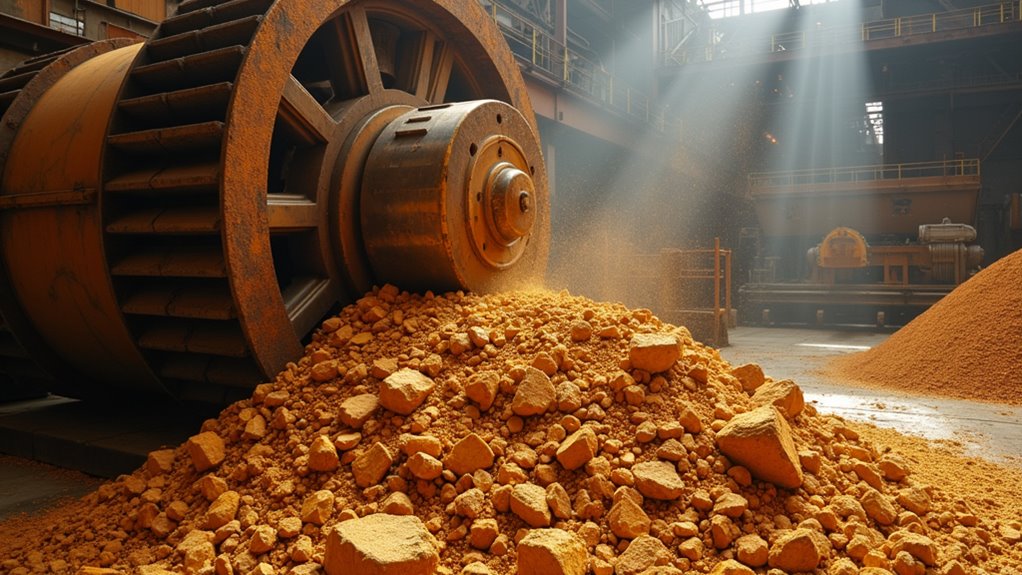
Gold mining washing machines blend raw power with precision engineering to separate precious metals from worthless dirt. These badboys use water flow and mechanical agitation – think massive washing machines on steroids – to process tons of material per hour. Modern systems incorporate advanced features like specialized riffles, pump-driven water circulation, and automated material feed systems. Some even pack multi-stage processing capabilities that’d make your grandmother’s old pan weep. There’s a whole world of gleaming efficiency waiting in these mechanical beasts.

The glittering allure of gold has driven prospectors to develop increasingly sophisticated equipment over the centuries. Modern gold mining equipment ranges from basic panning tools to complex machinery designed to process massive amounts of ore efficiently and effectively. The evolution of these tools has revolutionized how we extract precious metals from the Earth’s crust. Additionally, the introduction of advanced technologies has played a significant role in enhancing mining efficiency and safety. Innovations in mining equipment have allowed for more sustainable practices in recent years.
At the heart of many gold recovery operations are the trusty gold pans, typically 14 inches in diameter and featuring clever design elements like ridged areas that trap heavier materials. Modern designs incorporate built-in riffles that enhance the capture of gold nuggets during the panning process. These seemingly simple tools remain essential for both novice prospectors and seasoned professionals, serving as the first line of defense in separating valuable gold from worthless sediment. While basic in design, their effectiveness has stood the test of time.
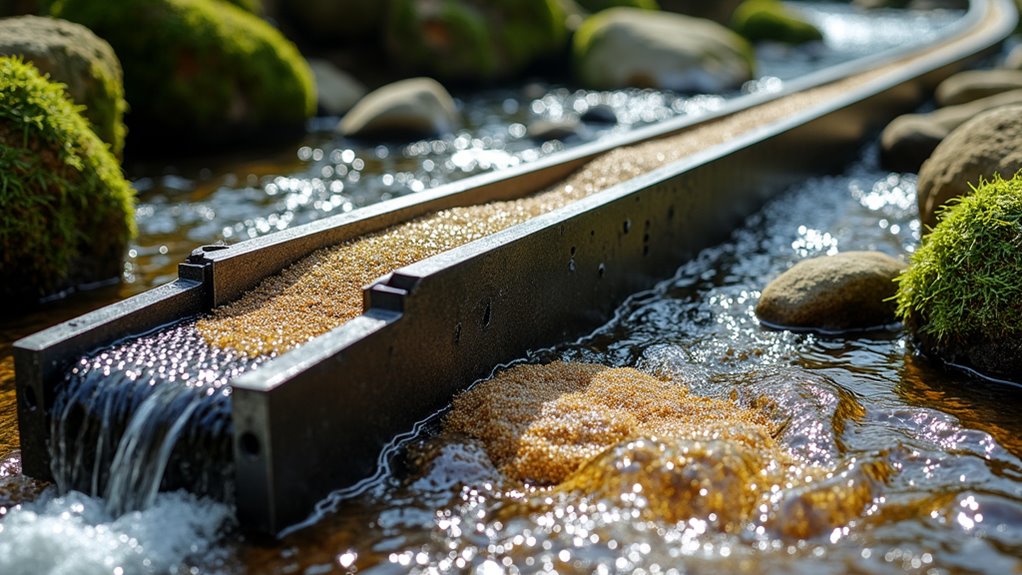
Sluice boxes represent the next step up in mining sophistication, offering a more efficient method for processing larger volumes of material. These long, narrow contraptions, usually crafted from aluminum in modern iterations, use gravity and water flow to separate gold from alluvial deposits. The choice of sluice box size can make or break an operation’s success – a vital detail that seasoned miners never overlook. The lightweight design of modern sluices ensures they can be easily transported in pickup trucks to remote mining locations. Additionally, modern sluice boxes often feature adjustable angles to optimize the flow and recovery of gold. This versatility allows miners to adapt to varied river conditions, ensuring effective recovery regardless of the mining environment.

Power sluices and highbankers have emerged as game-changers in the industry, utilizing pumps to create artificial water flow that mimics natural conditions. These systems, often combined with dredges, greatly boost processing capacity and efficiency. Meanwhile, gold dredges have opened up previously inaccessible areas to mining operations, though their use sometimes requires maneuvering through a maze of permits and regulations.
The introduction of centrifugal gold concentrators has revolutionized fine gold recovery. These sophisticated machines employ spinning rotors to separate heavy materials, processing anywhere from a few ounces to hundreds of pounds per hour. Their relatively simple maintenance requirements and high throughput rates make them increasingly popular among serious operators.
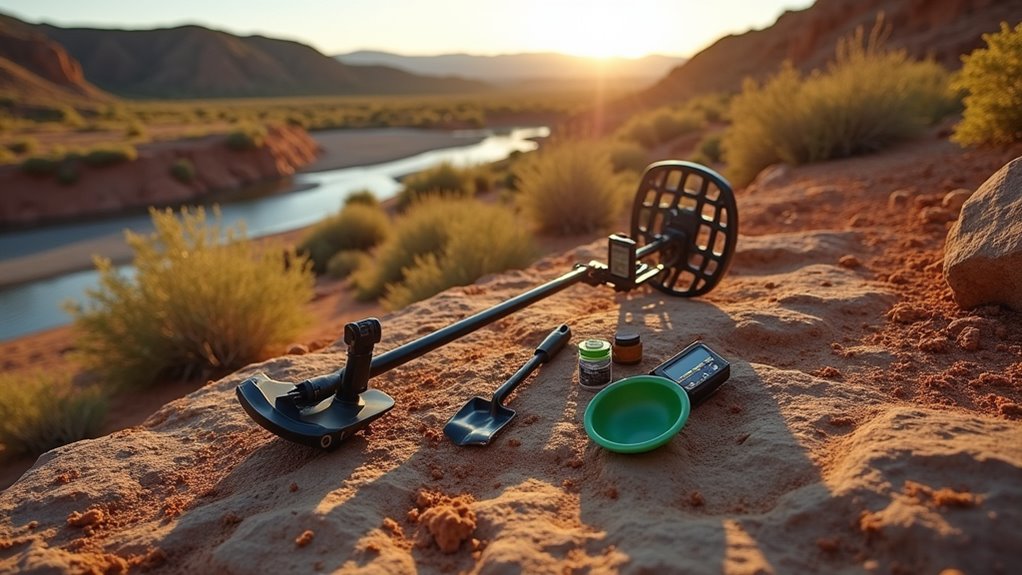
Metal detectors designed specifically for gold prospecting have transformed the hunting experience, using advanced electronic signals to locate precious metals beneath the surface. Available in both VLF and PI varieties, these devices have simplified the prospecting process, though success still demands patience and skill.
For processing raw ore, crushing equipment remains indispensable. Rock crushers, cone crushers, and flotation machines work in concert to break down and separate valuable minerals from worthless gangue material. Gold trommels play an essential role in this process, efficiently separating fine particles for further processing. This equipment, while requiring considerable investment, has become essential for any serious mining operation aimed at processing substantial volumes of ore-bearing material.

The continuous evolution of gold mining equipment reflects humanity’s enduring fascination with this precious metal, driving innovation in the pursuit of more efficient extraction methods. Each advancement brings new possibilities, while simultaneously presenting fresh challenges for those bold enough to chase the yellow metal.
Frequently Asked Questions
How Much Water Pressure Is Needed for Optimal Gold Washing Operations?
Prime gold washing demands serious muscle – we’re talking 1,200-3,000 PSI depending on the operation’s scale.
Light-duty prospectors can get by with 1,200-1,900 PSI, while medium operations need 2,000-2,500 PSI.
The big boys? They’re cranking it up to 3,000+ PSI for those stubborn clay deposits.

Pressure requirements shift based on material coarseness, bank height, and bedrock grade – it’s not exactly rocket science, but close enuff!
What Safety Certifications Should I Look for When Buying Mining Wash Equipment?
Key safety certifications for mining wash equipment include MSHA certification (mandatory in U.S.), ATEX for explosive atmospheres, and UL listing for electrical components.
Equipment should meet ISO quality standards and display CE marking for European compliance. Local mining regulations may require additional certs.
Smart buyers’ll check for PPE compatibility indicators and proper guarding certifications.
Pro tip: Never skimp on safety certs – they’re literally worth their weight in gold!
Can Gold Washing Machines Process Other Precious Metals Besides Gold?
Modern gold washing machines are surprisingly versatile workhorses.
They’re designed to handle various precious metals, including platinum, silver, and palladium. Most machines use gravity separation and centrifugal force – physical properties that work effectively across different metal densities.
The key is proper configuration: adjusting water flow, tilt angles, and classifier settings. Some units even tackle gems and rare earth elements when fitted with specialized screens and jigs!
How Often Should Maintenance Be Performed on Gold Washing Equipment?
Gold washing equipment requires rigorous maintenance at different intervals.

Daily checks focus on cleaning, noise monitoring, and basic operations.
Weekly maintenance involves screen inspections, bearing checks, and water system verification.
Monthly tasks include examining motor mounts, belts, and electrical components.
Annual servicing demands thorough system evaluation and parts replacement.

Missing these schedules can lead to costly breakdowns and reduced recovery rates – something no operator wants to deal with!
What Is the Average Lifespan of a Commercial Gold Washing Machine?
Commercial gold washing machines typically last 7-12 years with proper maintenance, though premium models can reach 15+ years.
Their lifespan largely depends on usage intensity and operating conditions in the mine. These workhorses handle about 3,000-5,000 cycles annually – quite the beating!
Environmental factors like water mineral content and debris load affect longevity. Some operators report machines lasting 20+ years, but that’s rare and usually involves significant parts replacement.