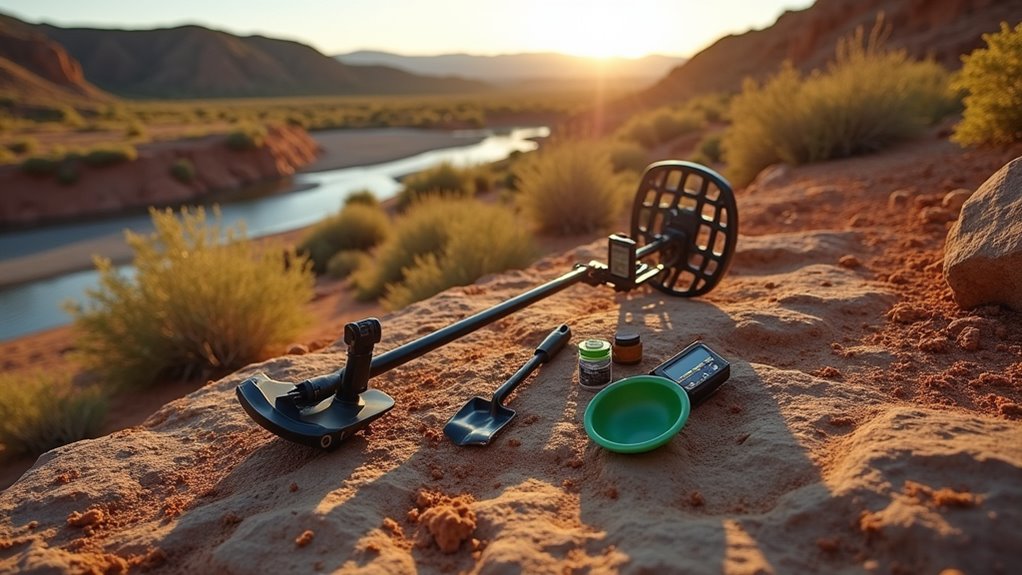
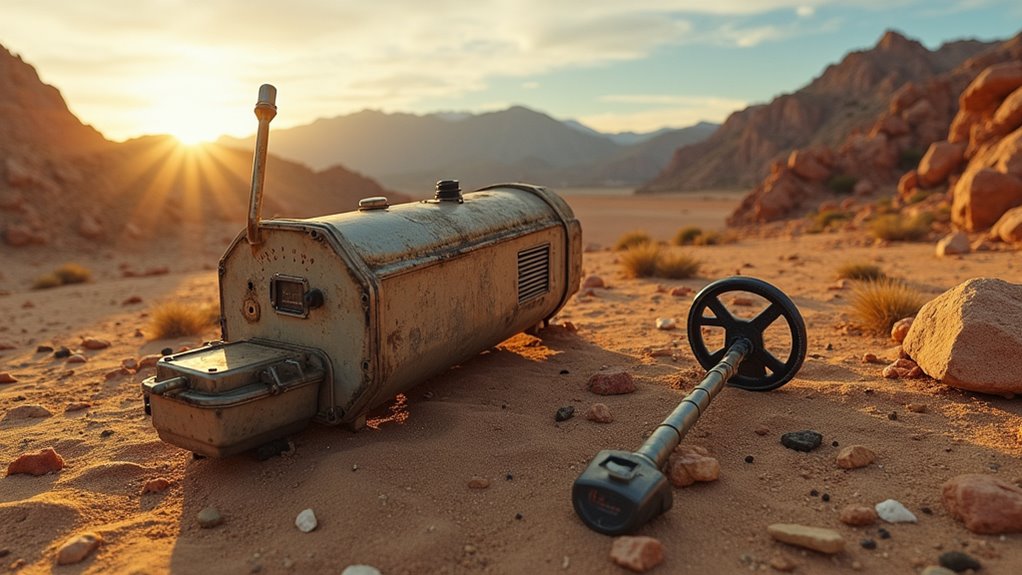
For small-scale hard rock mining startups, the RDGK15 impact crusher paired with JC25 jaw crusher handles feed sizes up to 45mm at 1-1.5 TPH – perfect for exploration projects. These compact crushers combine nicely with GoldKacha concentrators and supporting equipment like ball mills for fine grinding. Mercury-free processing and modern dust suppression keeps things environmentaly responsible. Setup’s surprisingly simple, like assembling flat-pack furniture (but way more fun). Theres plenty more to uncover about maximizing your small-scale operation.

The gritty world of small-scale hard rock mining just got a major equipment upgrade. The RDGK15 impact crusher and JC25 jaw crusher are leading the charge, handling feed sizes up to 45mm and crushing rates of 1-1.5 TPH. The RD15 Impact Crusher system expertly combines with the GoldKacha Concentrator to provide complete processing solutions. Regular equipment lubrication is essential to prevent premature wear and maintain optimal crushing performance. These compact crushers aren’t just tough – they’re practically pocket-sized compared to industrial behemoths, making them perfect for exploration projects where mobility matters more than bragging rights. Additionally, open pit mining can often lead to more extensive surface disruption compared to underground methods, making the choice of technique an important consideration. Furthermore, modern mining practices are increasingly adopting automation technologies to enhance efficiency and safety, aligning with the industry’s push toward sustainable practices that minimize environmental impact. Advanced technology plays a pivotal role in streamlining operations and reducing waste, showcasing the industry’s commitment to responsible mining.
Small-scale mining gets a mighty upgrade with compact crushers that pack industrial power into explorer-friendly packages.
It’s crucial to establish safety protocols to mitigate risks associated with mining operations.
SPEEDMINER mobile plants have blown the doors off traditional setups, offering 13 different models that’ll process anywhere from 2 to 120 TPH. These bad boys come mounted on trailers that’d make a monster truck jealous, complete with their own power source. No more begging the grid for juice – these plants are ready to rock n’ roll wherever gold decides to hide.

When it comes to grinding down that crushed ore, you’ve got options that’d make a chef jealous. Ball mills and rod mills handle the fine work, while the GoldKacha concentrator plays nice with various crusher setups. For those dealing with alluvial deposits, scrubbers get down and dirty, and the TriTank system’s got your back for cyanidation (though lets be real, nobody’s excited about using chemicals).
The separation game‘s got more moves than a chess master. Centrifugal concentrators snag precious metals like a bouncer catching fake IDs, while magnetic separators pull ferrous materials faster than a teenager grabs their phone. Jigs, sluices, and spirals round out the gravity gang, each bringing their own special sauce to the separation party.
Don’t forget the supporting cast – conveyers that never complain about heavy lifting, water pumps that keep things flowing smoother than a politician’s promises, and generators that’ll power your operation in places where electricity is more myth than reality.
And yes, you’ll need screens to keep your material sorted and sampling equipment because guessing is for amateurs.

Here’s the real kicker: modern small-scale equipment actually gives a damn about the environment. Mercury-free concentrate upgrading means you won’t be poisoning future generations, and SPEEDMINER plants run cleaner than your grandma’s kitchen. Smart operators are adding dust suppression and water recycling systems faster than you can say “environmental impact assessment.”
The economics make sense too – maintenance requirements are lower than a snake’s belly, and setup’s easier than assembling flat-pack furniture (well, almost). Perfect for artisanal miners or startups looking to break into the game without breaking the bank.
Plus, these systems grow with your operation, like a well-behaved investment should. Just remember: in mining, like in life, starting small doesn’t mean thinking small.
Frequently Asked Questions
What Permits and Licenses Do I Need to Start Small-Scale Mining?
A prospective miner needs both exclusive and non-exclusive licenses, depending on their operation’s scope.
Each jurisdiction’s specifics vary, but the basics include: environmental permits, mining rights, safety certifications, and local authority clearance.

Key requirements: being 18+, having registered address, clean tax record, and financial stability.
Most permits run 3 years and need environmental impact assessments and detailed site plans.
Some areas limit miners to 5 licenses max.
How Much Does It Cost to Set up Basic Hard Rock Mining?
Basic hard rock mining setup costs typically range from $1-4 million for a modest operation.
The biggest chunks? Equipment ($270k-$1.5m) and infrastructure ($1.35m-$5.8m).
Throw in permits and legal fees ($85k-$1m), plus those pesky operating costs eating 25-45% annually. Ouch!
Pro tip: Many newbies start by leasing equipment or partnering with established operators to slash initial costs.
Still, there’s no getting around it – mining ain’t cheap, folks!
Is Previous Mining Experience Necessary for Small-Scale Hard Rock Mining?
Previous mining experience isn’t mandatory for small-scale hard rock mining, but it sure helps!
While newcomers can succeed with proper research and training, they’ll face a steeper learning curve.

Smart beginners start with hand tools – learning crushing techniques and safety protocols before diving into mechanized equipment.
It’s all about prudent progression: master the basics, then scale up.
Some of the most successful operators started from scratch with zero experience!
What Safety Precautions Should Be Taken When Mining Hard Rock?
Hard rock mining demands rigorous safety protocols – no exceptions!
Miners must gear up with proper PPE: hard hats, safety glasses, steel-toed boots, and high-vis clothing are non-negotiable.

Ground stability checks are essential – loose rocks kill. Proper ventilation keeps deadly gases at bay, while regular equipment maintenance prevents catastrophic failures.
Air quality monitoring is vital, and proper lockout-tagout procedures save lives.
Never skimp on safety – the rock’s always harder than you!
How Do I Identify Potentially Profitable Hard Rock Mining Locations?
Profitable hard rock locations often reveal themselves through key geological indicators: exposed rock outcrops, distinctive mineral veins, and iron-rich soils.
Prospectors should look for historical mining sites – where there’s smoke, there’s usually fire! Geochemical sampling and basic geophysical surveys can confirm initial hunches.
Pro tip: fault lines and quartz formations are gold’s BFFs. Local geological surveys provide treasure maps of mineralization patterns.
And don’t forget – water sources nearby are essential for processing!