Geologists aren’t just fancy rock collectors – they’re the brains behind modern gold exploration.
These specialists transform raw geological data into precise drilling locations using cutting-edge tech like drones and XRF devices. Sure, they’ve copped criticism for mining’s environmental impact, but today’s geologists actually lead the charge in sustainable practises and ecosystem protection.
Working with diverse teams and local communities, they’re constantly evolving their methods. There’s more to these science-savvy professionals than meets the eye.

While armchair investors dream about striking it rich in gold stocks, geologists are the ones getting their hands dirty doing the real work. These rock-obsessed professionals aren’t just wandering around with pickaxes and pans – they’re sophisticated scientists wielding cutting-edge technology and centuries of accumulated knowledge to find the next big gold deposit.

Let’s be honest, without geologists, the mining industry would be nothing more than a glorified guessing game. These experts analyse complex geological formations, interpret geophysical data, and create detailed maps that make the difference between striking gold and drilling million-dollar holes in barren ground. They’re the ones who understand that gold doesn’t just appear randomly – it follows specific mineralisation patterns that only trained eyes can spot. The increasing global demand means that mineral exploration remains crucial despite recycling efforts. Core drilling samples provide essential data about the subsurface geology and potential gold deposits, while geophysical surveys help to identify areas with the highest probability of containing gold deposits.
Geologists transform mining from blind luck to science, using expertise to read Earth’s hidden signs and find gold where others see only dirt.
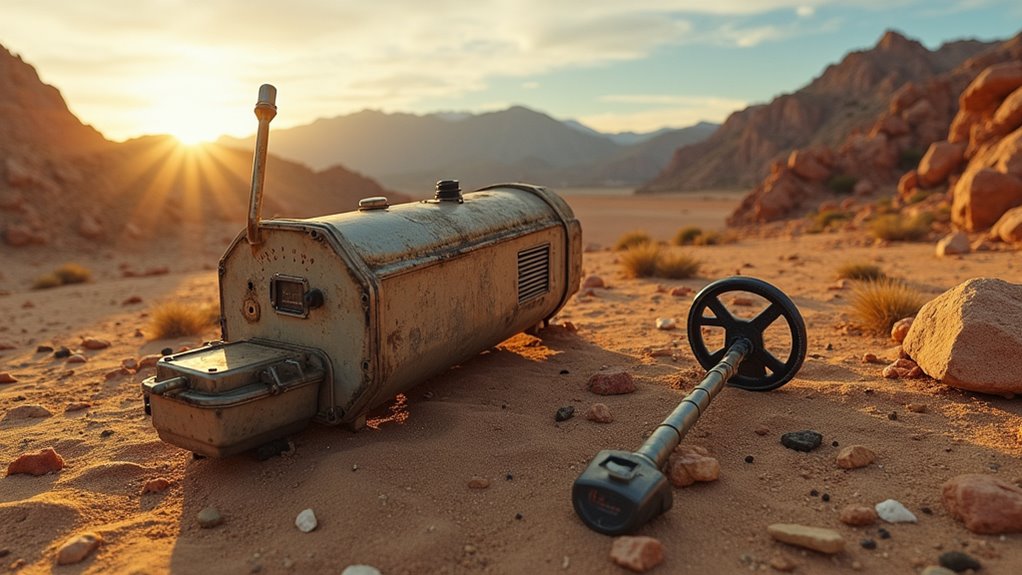
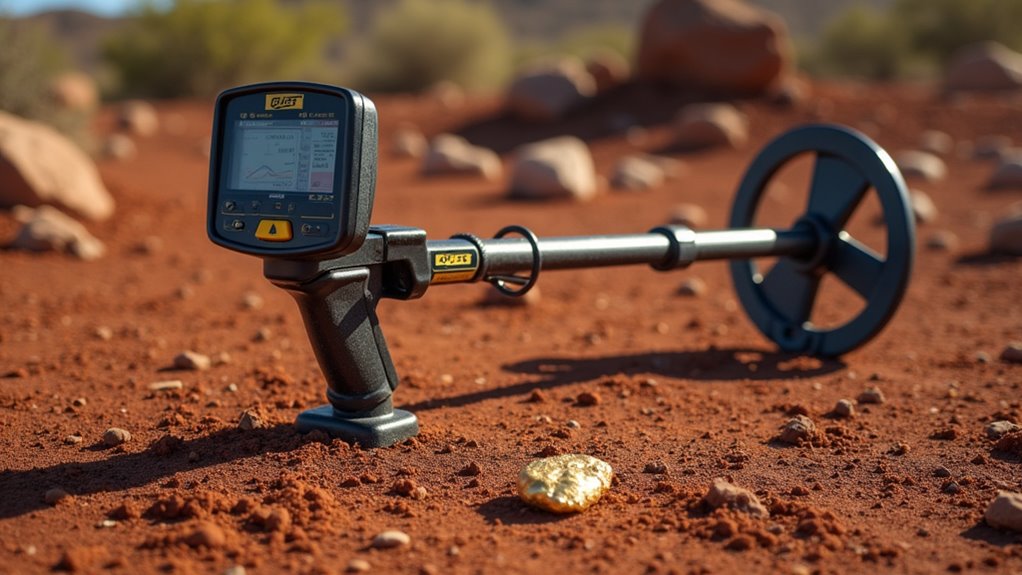
Modern gold exploration is far more high-tech than most people realise. Geologists now employ drones for aerial surveys, use portable XRF devices for instant elemental analysis, and leverage machine learning algorithms to identify promising targets. They’re not just dirt-kickers anymore; they’re tech-savvy professionals who can handle both core samples and complex 3D modelling software with equal expertise.
The environmental aspects can’t be ignored either.
Gone are the days when mining companies could just tear up the landscape without consequences. Today’s geologists play an essential role in ensuring exploration activities don’t wreck the environment.

They work alongside environmental specialists, implement sustainable practices, and contribute to rehabilitation planning. It’s not just about finding gold – it’s about finding it responsibly.
These professionals don’t work in isolation. They’re part of diverse teams that include geophysicists, geochemists, drilling crews, and project managers.
They need to communicate complex geological concepts to executives who mightn’t know their schist from their slate, while also maintaining relationships with local communities. It’s a delicate balance of technical expertise and people skills.
Professional development never stops in this field. While some might think geology is just about rocks that haven’t changed in millions of years, the techniques and technologies used to study them are constantly evolving.

Geologists must stay current through conferences, workshops, and continuous learning. They’re required to maintain professional certifications and often contribute to peer-reviewed publications.
The truth is, successful gold exploration requires more than just luck or hunches. It demands a thorough understanding of geological structures, exploration techniques, and resource estimation methods.
Geologists are the ones who turn promising ground into proven resources through rigorous scientific methodology and hard-won experience.
Frequently Asked Questions
What Qualifications and Education Are Required to Become a Gold Exploration Geologist?
A bachelor’s in geology is the bare minimum these days – but let’s be real, a master’s degree is what’ll get you noticed.
You’ll need hardcore skills in mineralogy, petrology, and economic geology. Field experience? Non-negotiable.

The real kicker? Gotta be tech-savvy with geological modelling software and GIS systems.
Professional certification (P.Geo) is basically mandatory, and you better be ready to trek through remote locations.
Safety certs are essential too.
How Much Does a Gold Exploration Geologist Typically Earn Annually?
Gold exploration geologists rake in serious cash – we’re talking anywhere from $65K to a whopping $191K annually.
The sweet spot? Around $112K for most diggers.

But here’s the kicker: those who chase the big bucks in oil-rich spots like Texas or resource-heavy regions can pull $135K+.
Location’s everything.
Even better if you’ve got years under your belt and some fancy letters after your name.
Industry’s booming – perfect time to cash in.
What Modern Technologies Do Geologists Use to Detect Potential Gold Deposits?

Modern geologists aren’t just poking around with pickaxes anymore.
They’re wielding high-tech gear like AI-powered satellite imagery that spots mineral deposits with 86% accuracy. LiDAR maps terrain in ridiculous detail, while hyperspectral cameras detect invisible gold signatures.
Smart drills with real-time sensors slash waste by 95%. They’ve even got portable XRF analysers that tell you what’s in rocks instantly.
Pretty flash compared to the old days of guess-and-dig.
How Long Does It Take to Complete a Typical Gold Exploration Project?
Gold exploration isn’t a sprint – it’s a marathon that’ll test anyone’s patience. Most projects drag on for 10-20 years from first discovery to actual production, with the average sitting at a whopping 15.7 years.
That’s longer than some marriages last! The whole process includes exploration (1-10 years), development (1-5 years), mining operations (10-30 years), and closure phases.
Blame strict regulations, community drama, and complex geology for the wait.
What Are the Physical Demands and Risks of Working in Gold Exploration?
Gold exploration isn’t for the faint-hearted. Geologists face brutal physical demands – lugging heavy gear through rugged terrain, battling extreme weather, and standing for hours in harsh conditions.
They’re constantly at risk of accidents from drilling equipment, nasty wildlife encounters, and exposure to toxic substances. Not to mention the psychological toll of isolation and irregular hours.
It’s a tough gig that’ll test anyone’s limits.