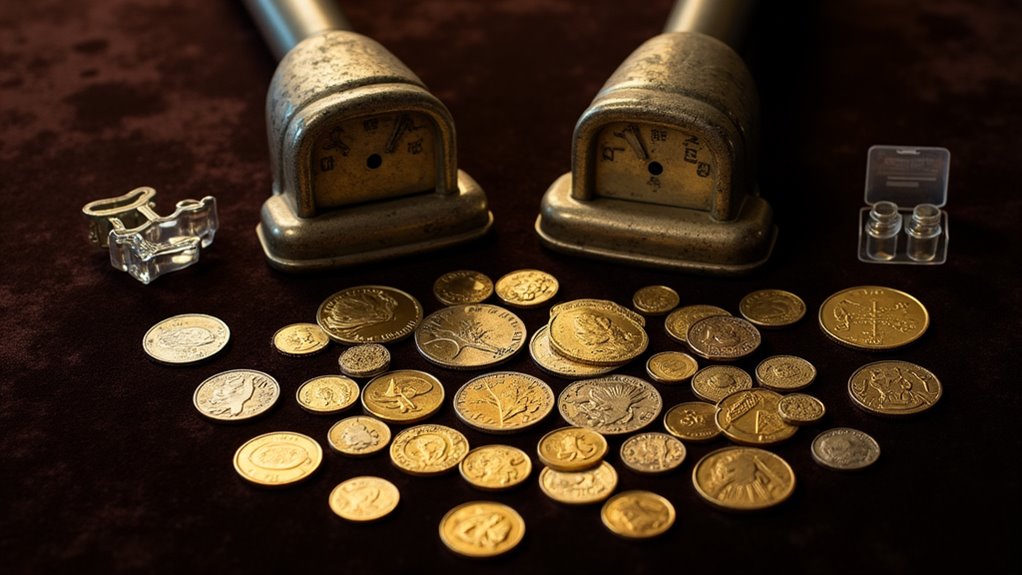
Despite centuries of treasure hunters scouring the Atlantic coast, Blackbeard’s legendary buried gold remains more myth than reality. Historical records show most pirates, including the notorious Edward Teach (Blackbeard), spent their plunder quickly on luxuries and supplies rather than burying it. Captain William Kidd stands as the only documented pirate who actually buried treasure. The romantic notion of X-marked maps and hidden chests continues to captivate imaginations – there’s more to this golden tale than meets the eye.
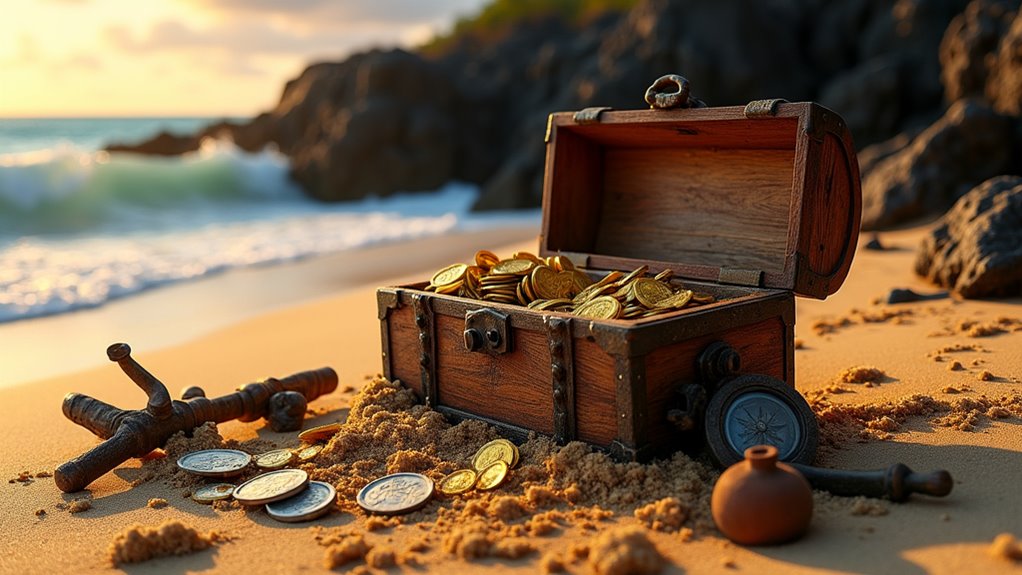
While swashbuckling pirates have captured imaginations for centuries through films and literature, many commonly-held beliefs about these seafaring outlaws are pure fiction. Take Blackbeard‘s legendary buried treasure – while tales persist of his massive wealth hidden somewhere along the Atlantic coast, there’s zero concrete evidence he ever buried a single gold coin. Yet this hasn’t stopped countless treasure hunters from pursuing this glittering fantasy.
Despite centuries of searching, not a shred of evidence exists that Blackbeard ever buried his legendary treasure along the Atlantic coast.
The reality of pirate life was far grittier than Hollywood would have us believe. Instead of hoarding their plunder in elaborate buried caches (marked with those cliché X-marks-the-spot maps), most pirates blew their riches faster than a Caribbean hurricane. Only Captain William Kidd is actually documented to have buried treasure, stashing his loot on Gardiner’s Island, New York – but he’s the exception that proves the rule. Interestingly, the treasures they sought often included gold coinage that had significant cultural value in various societies, much like the sustainable practices employed in modern gold mining to reduce environmental impact. In fact, many of these coins were sourced from regions where ethical mining practices are now being advocated to ensure fair treatment of workers and minimal environmental damage.
And speaking of Hollywood fiction – that iconic “Arrr” accent? Total rubbish! Pirates actually spoke in whatever regional dialect they grew up with, just like any other sailors of their era. We can thank Disney’s 1950 “Treasure Island” for popularizing that stereotypical pirate speak. Same goes for “shiver me timbers” and other supposed pirate phrases that never actually crossed a real bucciner’s lips.

Even the infamous Jolly Roger wasn’t as widespread as pop culture suggests. While some pirates did fly the skull-and-crossbones, others preferred different flags – including blood-red banners that meant they weren’t taking prisoners. Many crews simply flew false national flags to trick their prey before revealing their true colors.
Here’s another myth-buster: while pirates did have codes of conduct, they weren’t exactly noble guidelines about honor among thieves. These “articles of agreement” were basically workplace rules focused on practical matters like dividing spoils and maintaining order. Break the code, and you might find yourself marooned on a deserted island – no romantic notion there!
Though piracy was mainly a male profession, some fierce female pirates made their mark on history. Anne Bonny and Mary Read proved women could be just as ruthless as their male counterparts, often disguising themselves as men to join crews. Their exceptional stories stand out precisely because they were such rare exceptions in a male-dominated world.
Perhaps the biggest myth is that pirates lived constantly on the run. In reality, many operated openly from established bases like Nassau and Tortuga, often with local officials’ tacit approval (usually bought with bribes). Rather than engaging in dramatic chases, most pirates simply waited along trade routes for easy targets.

The life wasn’t glamorous – disease, malnutrition, and brutal discipline were constant companions. It’s enough to make today’s romanticized notions of piracy walk the plank! Additionally, the economic challenges faced by pirates often forced them to adapt their strategies and operations to survive in a cutthroat environment.
Frequently Asked Questions
How Much Would Blackbeard’s Treasure Be Worth in Today’s Money?
Blackbeard’s legendary booty would be worth anywhere between $14.8 million to a whopping $259.3 million today – talk about serious treasure chest goals!
While no confirmed stash has ever been found (bummer!), historians estimate these figures based on typical pirate hauls of the 1700s.
The discovery of his ship Queen Anne’s Revenge in ’96 got everyone hyped, but sadly yielded zero gold.

Still, that potential fortune makes modern crypto gains look like chump change!
Did Blackbeard Ever Actually Bury His Treasure?
Historical evidence suggests Blackbeard never actually buried significant treasure.
While pop culture loves the image of pirates stashing gold in secret spots, reality’s way less romantic.
Most of Blackbeard’s plunder was likely spent on rum n’ supplies or split among his crew.

Even the discovery of his ship, Queen Anne’s Revenge, turned up basic artifacts but no massive treasure hoard.
The whole “buried treasure” thing? More fiction than fact, mate.
What Modern Technology Is Used to Search for Blackbeard’s Lost Gold?
Modern treasure hunters deploy an arsenal of high-tech gear to chase Blackbeard’s legendary gold.
Sonar imaging maps the seafloor, while magnetometers sniff out metallic signatures beneath sediment.

Submersible drones equipped with HD cameras scout treacherous depths, and GPR scanners pierce through centuries of soil.
Digital mapping software crossreferences historical charts with modern coordinates, while AI algorithms crunch data to predict promising search zones.
Still, that gold remains frustratingly elusive!
How Many Ships Carrying Blackbeard’s Treasure Remain Undiscovered?
The exact number of Blackbeard’s treasure ships remains a mystery, but maritime experts estimate several vessels from his fleet are still undiscovered.
While the Queen Anne’s Revenge was found, ships like Adventure and Revenge haven’t been located.

Historical records suggest Blackbeard commandered about 5-7 ships during his career, though its doubtful they carried significant treasure.
Most likley, these missing vessels contain more historical artifacts then actual gold.
Were Any of Blackbeard’s Crew Members Ever Caught With Hidden Treasure?
Historical records show no evidence of Blackbeard’s crew members being caught with significant hidden treasure.
When captured after Blackbeard’s death in 1718, their confiscated belongings amounted to roughly 2,500 pounds sterling – mostly trade goods like sugar and indigo rather than gold or jewels.
Despite intense interrogations and trials, none of the crew revealed any secret stashes.
Their booty consisted mainly of practical commodities rather than the legendary buried treasures of pirate lore.