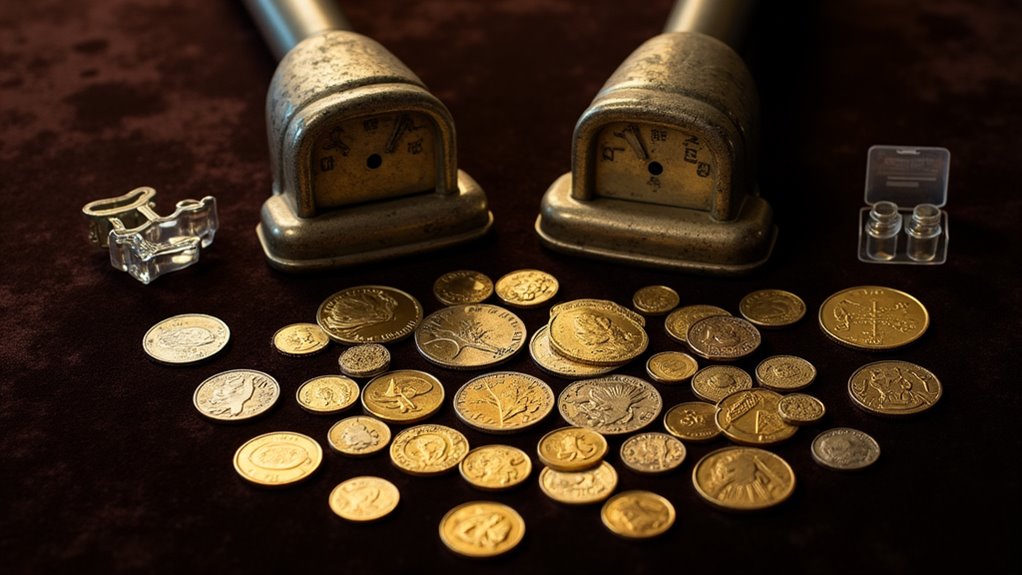
Selling graded coins requires strategic finesse – not just tossing them to the first buyer waving cash. Smart sellers secure professional grading from PCGS, NGC, or ANACS first, which can seriously juice up those values. Local coin shops offer quick money but often lowball, while specialty auctions reveal premium prices for rare specimens. Documentation and killer presentation photos are non-negotiable. Building relationships with reputable dealers is pure gold. There’s way more to squeezing maximum value from those slabbed beauties.

Steering through the world of graded coins can feel like tiptoeing through a minefield of dealers, auctions, and price guides – but selling these certified beauties doesn’t have to be a nightmare. The key to maximizing value lies in understanding the critical role professional grading plays in the marketplace. Coins certified by heavy-hitters like PCGS, NGC, or ANACS carry serious weight with buyers, especially those gem-quality pieces hitting MS-65 or above (and boy, do those command some eye-popping premiums). Numismatic apps can also assist in tracking the values of your coins. The grading scales used by these professionals are essential for determining a coin’s market value. Additionally, understanding the difference between bullion and numismatic coins is crucial for informed selling.
Smart sellers know better than to rush headlong into the first offer that comes their way. The market’s got more layers than your grandmother’s lasagna – from quick-cash local shops to glitzy auction houses where paddles fly like confetti. While coin shops offer that sweet instant gratification, they’ll typically lowball you for the convenience. Auction houses? Now there’s where the real magic happens for those ultra-rare specimens, though you’ll need patience and deep pockets to weather those commissions.
Patience pays when selling graded coins – quick local deals mean quick losses, while auctions unlock maximum value for the truly special pieces.
Let’s talk brass tacks about appraisals (pun totally intended). Getting a pro evaluation isn’t just smart – it’s absolutely essential for avoiding the classic “I-had-no-idea-it-was-worth-that-much” facepalm moment. Some outfits, like American Rarities, even offer free appraisals. But don’t just trust any Joe Schmoe with a loupe; seek out certified appraisers who know their MS-70s from their PR-69s.

Organization is paramount when prepping coins for sale. Create an inventory that’d make a librarian proud, detailing every last certification number and grade. And for heaven’s sake, keep those babies in their original holders! Nothing sends buyers running faster than coins that look like they’ve done time in a washing machine.
Documentation? If you’ve got it, flaunt it – especially for those pieces with interesting backstories. Numismatics is not only about collecting coins but also understanding their historical and monetary significance.
The art of the deal comes down to comparing offers like a hawk eyeing its prey. Use resources like the “Blue Sheet” (that’s the Certified Coin Dealer Newsletter for newbies) to separate the wheat from the chaff. Smart sellers know to factor in those pesky fees that can eat into profits faster than a mouse in a cheese shop.
And here’s a pro tip – building relationships with reputable dealers can pay dividends down the road.

Marketing matters more than most realize. Gorgeous photos that showcase every glorious detail of those certification labels? Essential. But don’t just throw your treasures up on eBay and hope for the best. Target those specialty forums where serious collectors lurk, ready to pounce on quality pieces.
Frequently Asked Questions
How Long Does It Typically Take to Complete a Coin Grading Process?
Coin grading turnaround times vary wildly – it’s like waiting for your coffee, except way more expensive!
Professional services typically take 20-30 business days for standard submissions, but backlogs can stretch that to 45+ days.
Express services? They’ll bump you to the front for a premium, usually 5-7 days.
But here’s the kicker – some rare pieces need extra scrutiny, turning that wait into a nail-biting marathon.
Market’s crazy these deys!
Can I Resubmit a Coin for Grading if I Disagree With Results?
Yes, collectors can resubmit coins for regrading if they disagree with initial results.
Most major grading companies like NGC and PCGS offer regrade services – though there’s no guarantee of a higher grade. The coin must stay in its original holder during submission, and full grading fees apply regardless of outcome.

Fair warning: coins can occasionally be downgraded! It’s a gamble that might pay off, but submitters should carefully weigh the risks vs potential rewards.
What Happens if My Graded Coin Gets Damaged During Shipping?
If a graded coin gets damaged during shipping, immediate action is essential.
First, document everything with photos and preserve all packaging materials. Insurance claims should be filed ASAP with the shipping carrier – though good luck dealing with that bureaucratic nightmare!
The coin may need re-slabbing, which ain’t cheap (we’re talking $300+ at PCGS).

Pro tip: Always, ALWAYS insure those precious slabs for full value, or risk taking a serious financial hit.
Are There Specific Storage Requirements to Maintain a Coin’s Grade?
Maintaining a coin’s grade requires obsessive attention to detail.
Proper storage means keeping coins in PCGS/NGC holders within temperature-controlled environments – think 65-75°F with humidity below 50%.
Those little silica gel packets? They’re lifesavers.

Never touch surfaces directly (edges only, folks!), and for heaven’s sake, keep those babies away from basements and attics.
One rookie mistake with PVC holders or household chemicals, and *poof* – there goes the grade!
Do Graded Coins From Different Certification Companies Carry the Same Value?
No way – graded coins definitely pack different punch$s depending on who’s done the grading!
PCGS and NGC sit pretty at the top, commanding premium prices thanks to their rock-solid reputations.
PCGS tends to fetch slightly higher prices (thanks to their notoriously strict standards), while NGC-graded pieces aren’t far behind.
But coins from lesser-known graders? They’re typically worth considerably less.
It’s brutal but true – certification company clout matters big time in this market!