The Falcon Concentrator emerges as the gold recovery powerhouse, crushing it at 150 tonnes per hour with sick centrifugal action. This beast combines smooth-wall rotation with continuous heavy fraction removal – pure efficiency porn for serious miners. While Blue Bowl and Keene options offer portable alternatives, the Falcon’s proven track record in boosting yields makes it the crown jewel of recovery tech. The machine’s ability to handle multiple minerals suggests there’s more to this story than meets the eye.

While gold mining itself may be as old as civilization, today’s recovery machines are pushing the boundaries of efficiency and precision like never before. The fierce competition among different gold recovery technologies has created a fascinating landscape where each machine brings its own unique advantages to the table. In terms of efficiency, open pit mining is often more cost-effective compared to underground methods, which can influence the choice of recovery technology. Additionally, the choice of gold washing plant can significantly impact the overall yield and efficiency of mining operations.
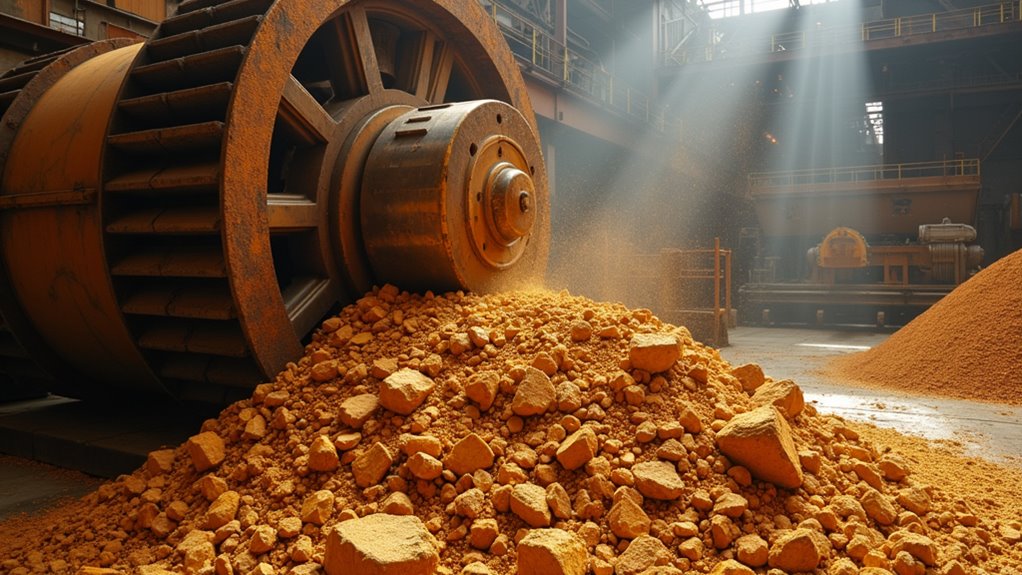
The Falcon Concentrator stands out as a heavy-hitter in the industry, handling an impressive 150 tonnes per hour – that’s no joke! Its enhanced centrifugal forces make it a versatile beast, tackling everything from gold to copper, and even coal. The rotating bowl with its smooth inclined wall guarantees continuous removal of heavier fractions, making it a reliable workhorse for serious mining operations. Using high-quality equipment like this has proven to boost overall yields significantly. This advanced technology makes it particularly effective at separating finely divided minerals. Additionally, the use of centrifugal force in recovery processes enhances the separation efficiency of various materials. Furthermore, the integration of washing equipment techniques can further improve gold recovery by removing impurities and debris. Understanding the importance of proper equipment in placer mining is crucial for maximizing recovery rates.
For those seeking exceptional gold recovery results, the Blue Bowl Concentrator has become somewhat of a legend in the field. Its brilliant use of water separation technology has made it a go-to choice for operations requiring quick processing of larger volumes. The beauty lies in its simplicity – portable, easy to set up, and particularly effective at capturing those elusive fine gold particles that often slip away with other methods.

The Keene Super Concentrator brings something different to the party. Running for 8 hours on a simple car battery (how cool is that?), it processes 100 pounds per hour with its clever Hungarian-style riffle design. At 44 inches by 8 inches, it’s compact yet powerful, proving that size isn’t everything in gold recovery.
Speaking of efficiency, Spiral Wheels have carved out their own niche in the market. The Desert Fox and its manual operation counterparts excel at cleanup processes, particularly when dealing with those annoying smaller particles that make miners pull their hair out.
Traditional Sluice Boxes continue to hold their ground, processing massive volumes of material with nothing more than gravity and running water – sometimes the old ways still work best!
The Automatic Gold Recovery Electrowinning System represents the cutting edge of recovery technology. Processing 110 liters daily while consuming just 100W of power, it’s like the Tesla of gold recovery machines. Its ability to recover all precious metals from pregnant solutions makes it a valuable asset for any serious mining operation.

Centrifuges round out the top-tier options, operating in cycles lasting anywhere from 30 minutes to 2 hours. While they require more skill and investment than other methods, their superior concentration capabilities make them worth every penny for those who master their operation. The learning curve might be steep, but the results speak for themselves.
Each of these machines offers unique advantages, and choosing the right one depends on specific mining conditions, volume requirements, and available resources. The key is matching the technology to the task at hand – because in gold recovery, one size definitely doesn’t fit all.
Frequently Asked Questions
How Often Should I Maintain and Service My Gold Recovery Machine?
Gold recovery machines need a multi-tiered maintenance schedule for peak performance.
Daily checks include visual inspections and cleaning off stuck material.

Weekly maintenance focuses on screen media and moving parts.
Monthly service requires motor mount checks and sensor calibration.
Annual maintenance is where the big stuff happens – complete vibration analysis and replacement of worn components.
Skip these schedules, and you’re basically throwing money down the drain!
What Safety Certifications Should I Look for When Buying Recovery Equipment?
Key safety certs for gold recovery equipment:
MSHA approval is absolutely essential – it’s the gold standard (pun intended!) for mining safety.
ATEX and IECEx are vital if working with electrical components in hazardous zones.
ISO 45001 shows the manufacturer takes safety seriously.
Don’t forget UL certification for electrical safety.

Pro tip: equipment lacking these basic safety stamps ain’t worth the risk, no matter how shiny the price tag looks!
Can These Machines Process Both Alluvial and Hard Rock Gold Deposits?
Modern gold recovery machines are impressively versatile – they can tackle both alluvial and hard rock deposits without breaking a sweat.
These beasts use gravity concentration and other techniques to process everything from riverbed gold to quartz-locked treasures.
Whether it’s loose placer gold or stubborn rock-bound deposits, today’s equipment handles it all.

Most manufacturers now offer integrated systems that can switch between deposit types, making them seriously adaptable investments for mining operations.
What Is the Average Lifespan of a Professional Gold Recovery Machine?
Professional gold recovery machines typically last 5-10 years with standard use, though high-end models can stretch to 15-20 years if babied like a show pony.
The real kicker? It’s all about TLC – maintenance separates the champs from the chumps.
Budget models might tap out at 2-3 years (yikes!), while proper care can double a machine’s lifespan.
Most manufactures slap on a 1-3 year warranty, but that’s just the starting line.
Are There Portable Versions Available for Small-Scale or Recreational Mining Operations?
The market’s flooded with compact gold recovery options that pack serious punch.
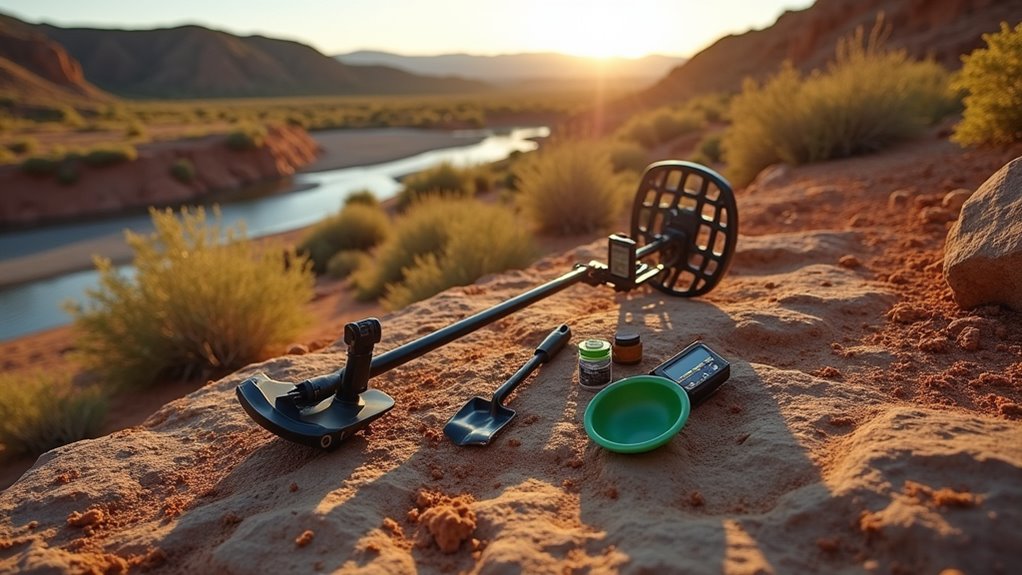
From the Desert Fox’s water-sipping automated panner to those nifty Gold Cube stackable systems, portable units are revolutionizing recreational mining.
Most run on car batteries or small gas engines, processing 1-10 tons per hour.
They’re perfect for weekend warriors hitting remote spots – just remember to nail that setup and water flow, or you’ll be chasing fool’s gold instead of the real deal!