The fierce battle between condition and rarity shapes a gold coin’s true worth, often launching values into orbit beyond raw metal content. Professional grading services like NGC and PCGS wield massive influence – a single grade difference can mean thousands in value. Pristine surfaces command eye-popping premiums, while limited mintages and historical quirks create collecting frenzies. It’s a wild dance of preservation and scarcity that transforms ordinary gold into numismatic treasures. The rabbit hole of valuation factors runs deeper than most realize.
Treasure hunters and investors alike know that determining a gold coin’s true value isn’t just about weighing precious metal – it’s an artful dance of multiple factors that can send prices soaring (or crashing) faster than you can say “numismatic premium.” From the obvious markers like purity and weight to the more nuanced elements of rarity and historical significance, gold coins pack a complexity that makes cryptocurrency look like child’s play.
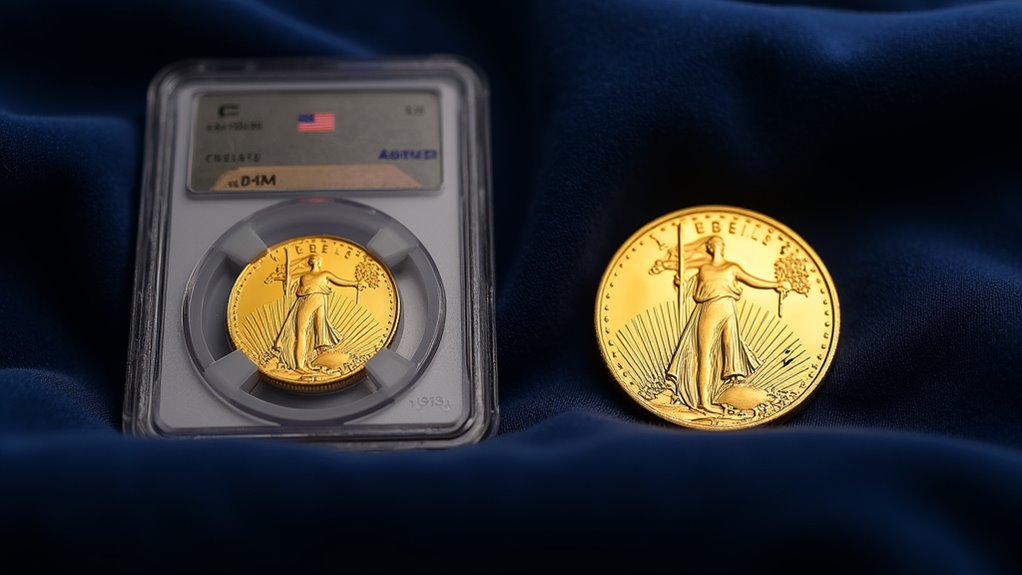
When it comes to condition, those pristine surfaces matter more than most realize. A single scratch can slash thousands off a coin’s value faster than a bear market. Uncirculated and proof-quality pieces command serious premiums, while their battle-worn cousins languish in the bargain bin. Professional grading services like NGC and PCGS have turned condition assessment into a science, slapping grades on coins that can make or break their market appeal. Those little plastic slabs they come in? They’re basically VIP passes to higher valuations. The Krugerrand’s legacy further emphasizes how high-quality coins can maintain their value over time, especially when considering long-term value growth in numismatics. Additionally, the market value of bullion can fluctuate based on global economic trends, influencing the desirability of high-quality coins.
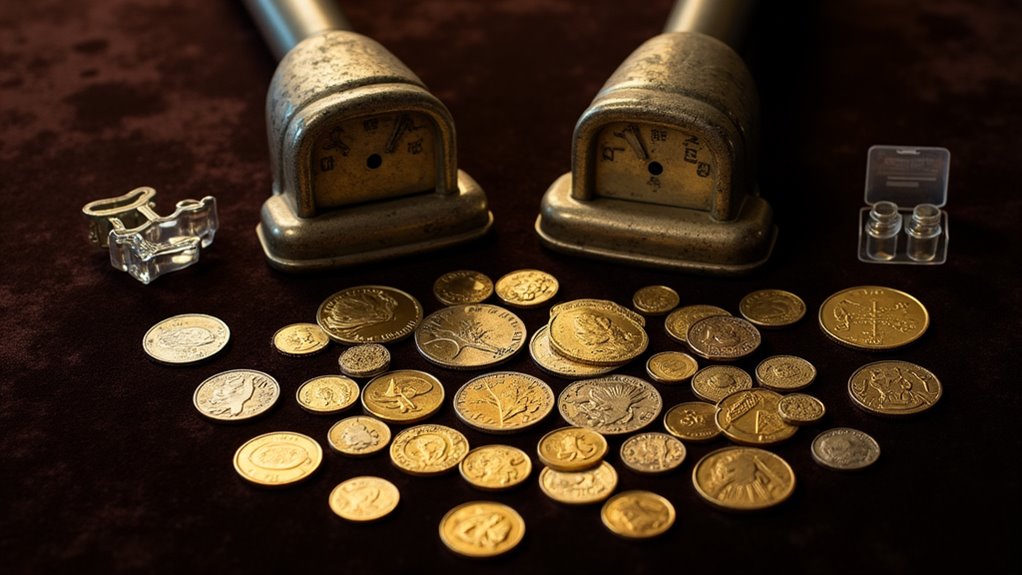
Rarity plays an even wilder game with gold coin prices. Limited mintages, historical oddities, and those deliciously collectible minting errors can turn an otherwise ordinary piece into a numismatic rockstar. Take the 1904 Gold Lewis and Clark dollar – it’s not just rare, it’s practically unicorn-level scarce.
Minting errors and scarce editions can transform ordinary gold coins into numismatic legends, sending their value through the stratosphere.

And don’t even get us started on coins with unique mint marks – they’re like the limited-edition sneakers of the precious metals world, only way more valuable.
The marriage of condition and rarity creates some truly explosive value propositions. A rare coin in mint condition? That’s the numismatic equivalent of hitting the jackpot. Consider those MS-graded 1908 Indian Gold Half Eagles – they’re not just coins, their time capsules that happen to be made of gold.
And here’s the kicker – when these factors align with strong market demand, prices can go absolutely bonkers.
The certification game adds another layer to this value sandwich. Those fancy slabs from NGC or PCGS don’t just protect the coin; they’re basically passports to premium pricing. Uncertified coins? They’re like showing up to a black-tie event in sweatpants – nobody’s gonna take them seriously, no matter how nice they might actually be.

Market conditions keep this whole circus spinning. When inflation fears spike or currencies wobble, gold coins suddenly look mighty attractive.
Additionally, understanding how professional grading works can significantly enhance a collector’s ability to assess a coin’s true worth.
But it’s not just about the gold content anymore – those numismatic premiums can multiply faster than rabbits in springtime. Regional preferences create hot spots of demand, turning certain coins into local celebrities while others get the cold shoulder.
It’s a complex dance of supply, demand, and collector psychology that keeps everyone guessing – and that’s exactly what makes it so darn interesting.
Frequently Asked Questions
How Can I Protect My Gold Coins From Environmental Damage?
Protecting gold coins requires obsessive attention to detail – but hey, these babies are worth it!
Smart collectors keep their precious pieces in airtight capsules or polyethylene bags, far from those sneaky environmental threats. Temperature control is essential (no attics or basements, folks!).
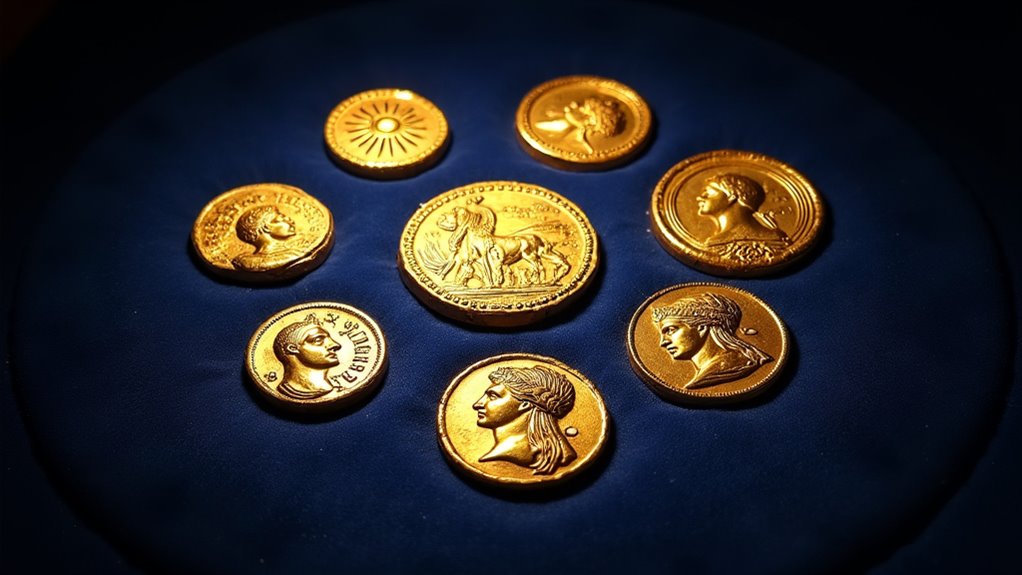
Only handle coins with cotton gloves because those grubby fingerprints are a no-go. Regular inspections and proper storage conditions keep these golden beauties pristine and valuable.
Which Countries Currently Produce the Most Valuable Gold Coins?
The United States and Canada dominate today’s premium gold coin market.
The American Gold Eagle and Canadian Maple Leaf command top dollar, thanks to their pristine purity and government backing.
South Africa’s legendary Krugerrand ain’t far behind – it’s basically gold royalty at this point.

China’s making waves too with those ever-changing Panda designs that collectors just can’t get enough of.
These powerhouse nations consistently pump out the good stuff that investors drool over.
Are Commemorative Gold Coins Worth More Than Standard Circulation Coins?
Commemorative gold coins typically command higher prices than their standard circulation counterparts.
Their limited mintage and special designs create that sweet spot of rarity and collector appeal.

While regular gold coins mostly track spot prices, commemoratives can fetch significant premiums – sometimes 2-3x more!
The historical significance and artistic elements just add more fuel to their value.
Plus, when they’re preserved in pristine condition? Those babies can absolutely skyrocket in worth.
Where Can I Find Reputable Gold Coin Appraisers?
Reputable gold coin appraisers can be found through major organizations like the International Society of Appraisers (ISA) and American Society of Appraisers (ASA).
Heritage Auctions and PCGS employ certified experts for professional valuations.

Local coin dealers offer appraisals, but neutral third-party experts are preferable.
Online services like Coinfully provide remote appraisals through photo submissions.
Pro tip: Always verify credentials and check reviews before trusting anyone with precious metals!
Should I Clean My Gold Coins Before Getting Them Graded?
Cleaning gold coins before grading is like throwing money down the drain.
Professional graders cringe at cleaned coins, often slapping them with that dreaded “cleaned” label that tanks their value faster than a lead balloon.
Even gentle cleaning leaves microscopic scratches that scream “amateur hour.”
Some cleaned coins lose up to 90% of their potential value – ouch!
Best to let those beauties keep their natural patina and original character intact.