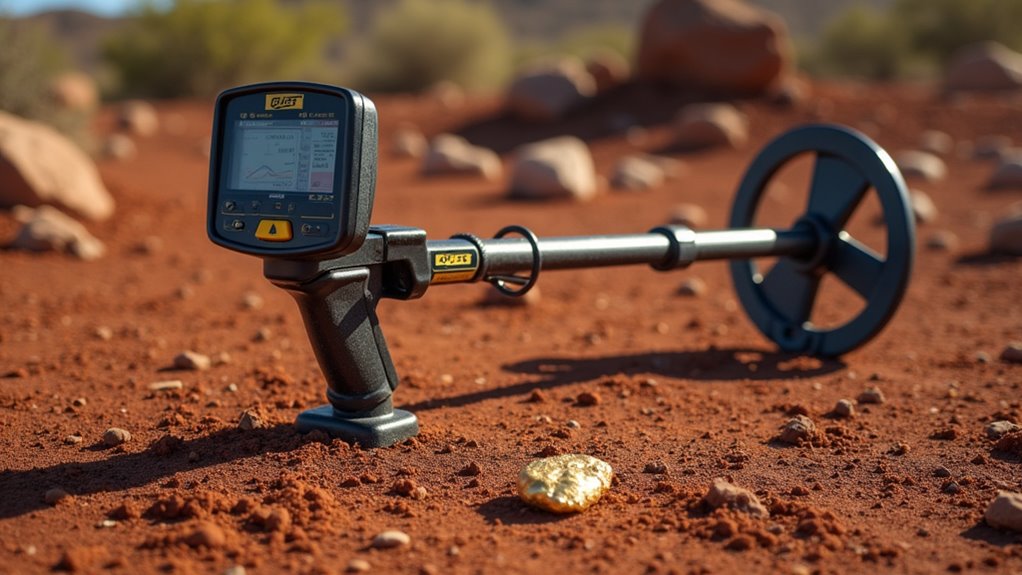
Alaska’s mining equipment has evolved from basic gold pans to monster dredging operations that’d make old-timers’ jaws drop. Modern prospectors mix traditional tools like 14-inch plastic pans and shovels with high-tech crushers and sluice boxes that process massive amounts of paydirt. Dredges – ranging from portable units to behemoth bucket dredges – dominate the scene, though water scarcity can throw a wrench in hydraulic operations. The equipment game keeps getting wilder, and there’s more gold-getting gear to uncover.

Since the Alaskan gold rush first ignited prospectors’ dreams, mining equipment has evolved from simple pans to massive dredging operations that’d make old-timers’ jaws drop. The humble gold pan remains a steadfast companion to modern prospectors, with 14-inch plastic versions sporting riffles being the go-to choice. A trusty magnifying lens helps identify materials accurately during the panning process. Even metal pans and frying pans can do the job, while a grizzly pan with half-inch holes helps separate the wheat from the chaff – or in this case, the coarse gravel from potential paydirt.
The serious prospector’s arsenal includes more than just pans. Shovels are absolutely essential for loosening creek bottom gravel, while rubber gloves and boots keep extremeties warm and dry. By the mid to late 1850s, easily accessible gold in California had been depleted, forcing miners to seek new frontiers. Small glass vials and magnets round out the basic toolkit, with magnets proving particularly useful for separating that pesky magnetic black sand from the good stuff. In addition, prospecting equipment has significantly improved in quality and versatility over the years, catering to both novices and seasoned miners alike. The introduction of crushers and pulverizers has further enhanced the efficiency of small scale mining operations, paralleling advancements in open pit mining techniques that have optimized ore extraction. Notably, placer mining equipment is critical for maximizing recovery rates in alluvial mining, especially as modern techniques continue to refine gold extraction methods.
When production needs ramping up, sluice boxes enter the picture. These 3-foot-long beauties process more material than you can shake a gold pan at, though they demand plenty of water and timber for construction. Rocker boxes take things up another notch – picture a 3-foot by 2-foot contraption with two parts, complete with punched sheet iron bottom and an inclined shelf sporting a woolen blanket that catches even the finest gold particles.

The real heavy hitters come in the form of hydraulic mining equipment. These bad boys handle muck stripping operations like nobody’s business, though they’re pretty demanding – requiring elaborate systems of reservoirs, ditches, and flumes. Water scarcity in Alaska can be a real pain in the neck for hydraulic operations, but when combined with open-cut and dredging, they’re surprisingly economical.
Speaking of dredges, these mechanical monsters come in various flavors. Bucket dredges sporting 2.5 to 5 cubic foot capacity are common, while combination dredges flex their muscles with revolving screens, flumes, and conveyers. The mighty stacker/California dredge tackles the most challenging deposits, though maintaining these beasts requires a well-stocked machine shop and plenty of spare parts.
Modern times have brought us portable equipment that’d make yesterday’s prospectors green with envy. Small suction machines, marketed as “gold dredges,” allow lone wolves to work remote locations previously out of reach. Both floating surface dredges and submersible units are making waves in the industry, though environmental impact studies are raising some red flags about their effects on streams.
Still, these innovations represent the latest chapter in Alaska’s ongoing gold saga, proving that even in the 21st century, the quest for yellow metal continues to drive technological advancement in the last frontier.
Frequently Asked Questions
What Survival Gear Should Miners Pack for Remote Alaskan Gold Mining Locations?
Miners heading to Alaska’s remote goldfields better pack serious survival gear: waterproof tents, sub-zero sleeping bags, and satellite comms are non-negotiable.

Smart prospectors don’t skimp on water filters, bear-resistant food containers, and GPS devices w/ backup batteries.
First aid kits, layered clothing, and emergency flares? Essential.
And dont forget that bear spray – cause nobody’s finding gold if they’re bear food.
Pack smart or pack it in.
How Much Does It Cost to Start a Small-Scale Gold Mining Operation?
Based on current market conditions, starting a small-scale gold mining operation requires $2-3 million minimum investment.

Equipment costs eat up the biggest chunk – usually $1-2 million for basic machinery like excavators and processing plants.
Then there’s land acquisition ($500k+), permits ($50-200k), and those pesky operational expenses.
Pro tip: savvy operators set aside 20% extra for unexpected costs.
It’s not cheap, but hey – there’s gold in them hills!
What Permits and Licenses Are Required for Gold Mining in Alaska?
Mining in Alaska requires a stack of paperwork that’ll make your head spin!
Key permits include the APMA form, federal permits from Army Corps of Engineers and BLM, plus state permits from various AK departments.
Miners need proper claim stakes recorded with DNR, annual rental fees paid, and an Alaska mining license.
Don’t forget environmental permits – Clean Water Act, air quality, and fish habitat.
It’s complex AF but totally necessary!
Can Tourists Visit Active Gold Mining Sites During the Alaskan Season?
Yes, tourists can absolutely hit up active gold mining sites in Alaska during the prime season from mid-May through mid-September.

Popular spots like Gold Dredge 8 in Fairbanks and Crow Creek Mine near Girdwood offer guided tours that’ll get ya right into the action.
Most sites provide the essential gear and some even guarantee you’ll find gold (how’s that for tourist-friendly?).
Just remember to book ahead – these spots fill up faster than a prospector’s pan during rush season!
What Is the Average Gold Yield per Week for Successful Mining Operations?
Successful mining operations show wildly different yields based on their scale.

Small-scale miners typically pull 1-5 ounces weekly, while medium operations hit 10-50 ounces.
The big players? They’re crushin’ it at 100+ ounces per week.
But here’s the kicker – these numbers fluctuate like crazy depending on ore grade, processing tech, and equipment efficiency.
Mother Nature’s got a sense of humor tho – weather and seasonal changes can totally wreck those averages.